2012/07/17

「暑い日」を英語で


I was preparing some teaching materials today, and I came across a sentence that described today's weather pretty well.
  • It's a scorcher today. 今日は焼け付くように暑い。(example from Eijiro on the Web)
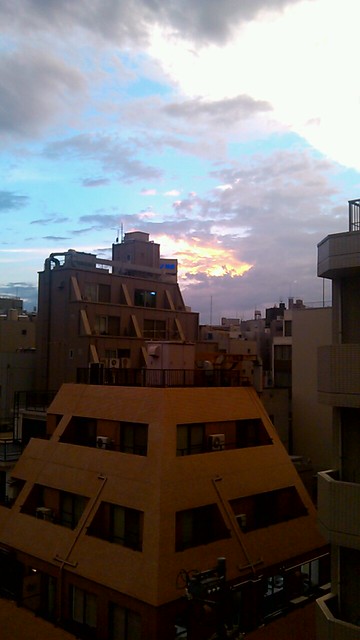
It may have been hot, but the sunset was a beautiful one. The sky went golden. I enjoyed looking at it for about five minutes until I went back inside because it was still too hot.

The three-day weekend was a scorcher, too. I went running on Sunday afternoon, not expecting it to be so hot. 45 minutes later, I was dripping wet.
  • enjoy the three-day weekend 3連休を楽しむ (definition from Eijiro on the Web)
What advice do you have for sweltering heat?
  • sweltering heat うだる[地獄の]ような暑さ (definition from Eijiro on the Web)
I wish there was a better alternative, but the most practical thing I know to do right now is to sit directly under the air conditioner vent. Watch out for heat stroke!
  • heat stroke 熱射病 (definition from Eijiro on the Web)

2012/07/13

ファミマの英語の使い方はまだ下手、「fun」と「funny」の違い


It's been almost three years since I wrote about Family Mart's English mistakes, and they still haven't done anything about it!
× Every Life, Every Fun
○ ??? I don't know what they want to say. Maybe "fun for everyone!"...
When you read that, what do you think? As a Japanese person, does that phrase make you interested in Family Mart? Does it encourage you to spend money there? I always wonder if this is a kind of English that somehow Japanese people can understand, even if I cannot.

"Fun" is an uncountable noun if we use it like this:
  • I have fun finding English mistakes in public.
  • How much fun would it be to talk to the CEO of Family Mart about their English usage?
"Fun" is an adjective, and we can use it like this:
  • It's a fun activity to hunt down mistakes like this.
While we are talking about "fun", it's good to remember the difference between "fun" and "funny". "Fun" means "enjoyable", while "funny" means "humorous". 
  • fun 楽しい
  • funny おかしい、ユーモアのある
When I read the Family Mart sign, I think it's funny that a large successful company can make silly mistakes like this. It's also a little sad.

We have a three-day weekend coming up. I hope all of you have a lot of fun!

2012/07/10

このカフェは英語の使い方に注意した方が良い


The sign says:
× We are Economy OPEN
○ We are conserving electricity. Please come in!
  • conserve energy 省エネをする、エネルギーを節約する (definition from Eijiro on the Web)
What they want to say is:
  • It might look dark inside, but we actually are open. Don't worry! Please come in and have something to drink.
If I didn't understand a bit of Japanese, I think I would never have been able to figure out what this cafe was trying to say.
  • figure out【句動】計算して合計[答え]を出す、算定する、〔答えを〕見つけ出す、 ~であると分かる、〔原因などを〕解き明かす、解明する、理解する、把握する、考え出す、考え付く、見当がつく  (definition from Eijiro on the Web)
It's a classic case of the noise in their English being too loud, making it not worth my time to even try to understand.

Conserving electricity is getting more important than ever. While it's great that utility companies are being forced to purchase electricity from enterprises generating electricity with renewable means, it may mean that we pay higher rates. Saving electricity could save you money.
  • renewable energy 再生可能エネルギー  (definition from Eijiro on the Web)
I've tried to keep the AC off to conserve, but today it was a bit too hot in the afternoon. I turned on the AC for a few hours. Now I'm back to conserving, with the windows open.

In the afternoon, we are doing the same thing as this cafe at our classroom. The lights may be off, but there's a good chance that one of us is around. Why not send us email and come by for a visit? I'll even turn on the AC for you!

2012/07/04

「if that will help」の使い方


Someone was asking me about these patterns.
...if that will help.
...if that will make a difference.
...if that will solve the problem.
These patterns are for offering assistance. When someone has a problem, you may want to help them. You suggest that you can do something to help by using this pattern.
  • make a difference 違いが生まれる、効果がある (definition from Eijiro on the Web)
For example, someone told me that she was concerned about a business email that she had written. She wasn't sure if it was correct or not, and she worried that it might not be polite enough. I told her:
I can take a look at it if that will help.
We can reverse the patterns and put them at the beginning of a sentence by changing "that" to "it".
If it will help, ...
If it will make a difference, ...
If it will solve the problem, ...
I could have said:
If it will help, I can take a look at it.
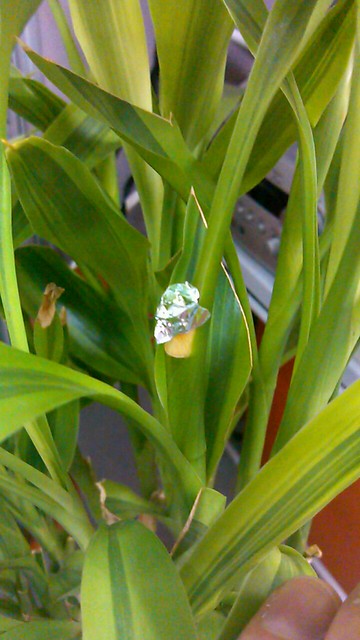
I have another plant question for you all. We have this "lucky bamboo", which is actually an African plant unrelated to bamboo. I took some cuttings from it, and they are growing well in some soil.
  • cutting 挿し木
However, there are no new shoots from where I took the cuttings. It has already been two months, so I expected to see some signs of shoots by now. You can see where it was cut. The top of the stalk is covered by a small piece of foil.
  • cutting《植物》〔種子から発芽した〕芽 (definition from Eijiro on the Web)
  • stalk《植物》柄、茎 (definition from Eijiro on the Web)
Can you give me some advice? If it will help, I can take more pictures or give you more information about the plant. I'm looking forward to hearing from you!

2012/06/26

「midnight」と「the middle of the night」の違い


I often stay up late. Sometimes I'm working on teaching materials. Sometimes I'm correcting the writing of students. Sometimes I'm programming. It depends, but it's not uncommon for me to be awake at 2am.

I was talking with someone about it, and she said:
× Oh, you were still awake at midnight.
Well, it's true. I was awake at midnight, but I was still awake after midnight. What she had wanted to say was:
○ Oh, you were still awake in the middle of the night.
"Midnight" means 12am, the hour after 11pm. "The middle of the night" means the general time when most people are sleeping, often thought of as between 1am and 4am. The dictionary might list other meanings for "midnight", but I think most people these days think of midnight as 12am.
  • midnight 夜の12時
  • in the middle of the night 真夜中に、深夜に、夜中に、夜半に、夜更けに (definition from Eijiro on the Web)
I've got an important presentation to give tomorrow, but I'm going to try to go to bed at a decent hour tonight.
  • at a decent time = at a decent hour わきまえた時間に (definition from Eijiro on the Web) (? Is this right? Someone let me know if this Japanese is correct, please.) = not too late
I don't want to be up until the middle of the night since it might make me too sleepy tomorrow. I think I'll try to sleep just after midnight tonight.

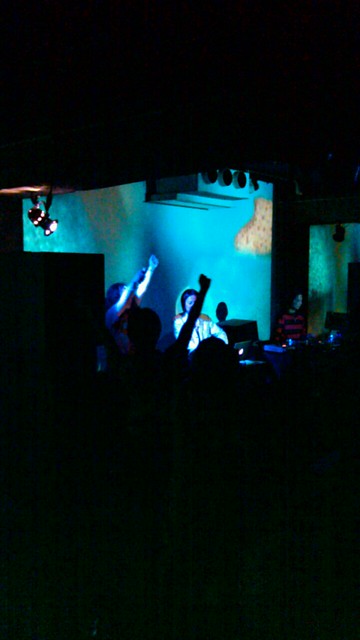
The other day I went to my friend Akimasa's performance in Roppongi. That's Akimasa in the photo above. It was a great show, and it even finished a little before midnight. Sometimes I go to hear techno DJs playing in the middle of the night, though. Maybe I can go to hear one after my presentation.

2012/06/19

「next month」と「the next month」の違い


Last week I asked someone about their plans for the next month, and he told me:
”I have a business trip at the end of July.”
It was strange, because I wasn't asking about the end of July, I was asking about the next 30 days. He thought I had asked about "next month". Are you confused?
  • the next month = the next 30 days (today, that means until July 19) 30日以内
  • next month = the month after this month (today, that means July) 来月
It's raining terribly right now because of this typhoon. Usually, typhoons don't come until next month. There's a lot of rain today, and the humidity is going to continue for the next month because it's the middle of rainy season.

Anyway, like the woman with the pink umbrella in the photo above, I'm going to run to the station now before the typhoon gets stronger. I hope everyone gets home safely!

2012/06/12

Tully'sはよくできました!


I had posted about Tully's funny mistake in front of the Yaesu store before:
http://upgradeenglish.blogspot.jp/2011/10/tullys.html
I was pleased to see yesterday that they had fixed the spelling mistake on the sign!

It seems that they changed their operating hours, opening half an hour later than they used to. I guess they took that opportunity to fix the spelling, too.

I sometimes make spelling mistakes. Today I made a mistake with "causative", writing "causitive".
  • causative verb 使役動詞
There's really no justification for spelling mistakes, though, particularly when it's so easy to use a spell-checker. Computer grammar checkers might still have a long way to go, and sometimes people use the wrong words, like "their" instead of "there" or "sacred" instead of "scared".
  • sacred【形】〔神にささげた〕神聖な、聖なる
  • scared【形】おびえた、怖がる、怖がって
  • (definitions from Eijiro on the Web)
However, when it comes to plain spelling mistakes, like mine above, there's no excuse.

Good job, Tully's! I'm glad you fixed your sign.

2012/06/02

「so that」の使い方


Someone was complaining to me about a leader.
× He is too old style so that he can't push people.
○ His style is so old that he can't lead people in the right direction .
The pattern above is:
  • so [adj] that [sentence]
It means that the degree of the adjective is very high, which causes some result.
You might be thinking "but Renick, I've heard 'so that' before." You are right, but "so that" has a different meaning.
  • [sentence A] so that [sentence B]
"So that" means "for the purpose of" or "in order to". The difference is the grammar. "So that" connects sentences, but notice these patterns:
  • for the purpose of [noun]
  • in order to [verb]
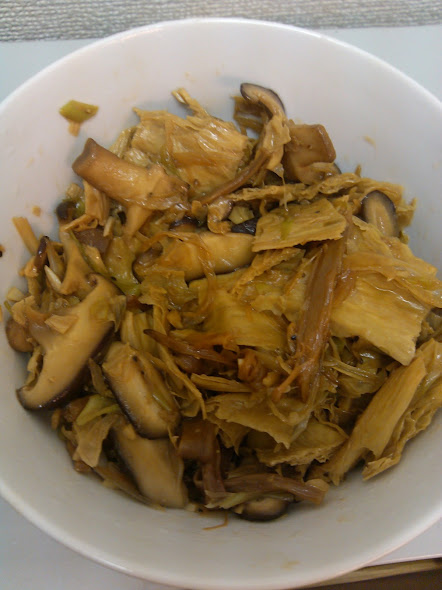
There's another recipe that I'm practicing these days. It's this Chinese-style cold dish that uses dried tofu and mushrooms with sweet soy sauce. It's so delicious that I want to eat it every week, but I'm not good at making it yet. I'm going to practice this weekend so that I can improve my skill.

I have written about this subject a few times before. Take a look:


フォロワー