2013/02/23

「need」の使い方, part 2


I was writing about "need" the other day. There are other ways to use "need". For example:
  1. This cutting needs potting. 
  2. = This cutting needs to be put into a pot.
  3. = I need to put this cutting into a pot.
The pattern is:
  • [noun] needs [verb+ing]
To be honest, I never use this pattern. It feels like something one of my grandmothers used to say. I'm more likely to use one of the other two patterns. Still, you should know about this pattern.

You couldn't use this pattern to say the sentence from the other day, though:
× Living in Tokyo doesn't need driving a car.
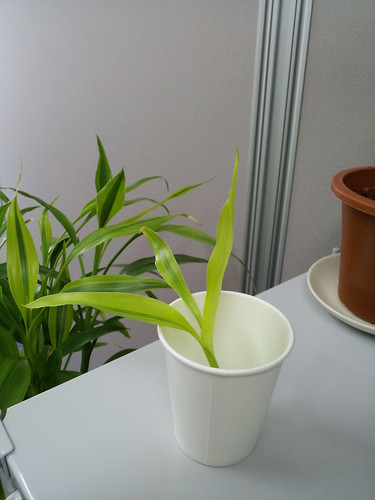
Getting back to my photo, the problem was that one stalk of our lucky bamboo was withering.
  • wither【自動】〔植物が〕しぼむ、しおれる、枯れる (definition from Eijiro on the Web)
The top was still green, though. I thought it needed trimming, so I cut it off and trimmed the withered part off of the stalk, too. I put the cutting in a cup of water with fertilizer, but today I should probably put it in some soil. I need to do it soon so that it has the best chance for survival.

If your English needs improving, please let me know!

2013/02/20

「need」の使い方


I was talking about getting around in Tokyo with someone the other day. That person told me:
× Living in Tokyo doesn't need a car.
○ Living in Tokyo doesn't require a car.
○ You don't need a car if you live in Tokyo.
If you check the dictionary, it says "need" means "require". I was thinking about why this seems unnatural to me. I'd say that to safely use "need", the subject should be a person, but that is not always the case. These are natural, though:
  • I need a bit more sleep.
  • Some of you need to speak English more often.
For matters and things, I'd suggest that you use "require".
  • [matter] requires...
  • Living in Tokyo doesn't require a car (of people who do so).
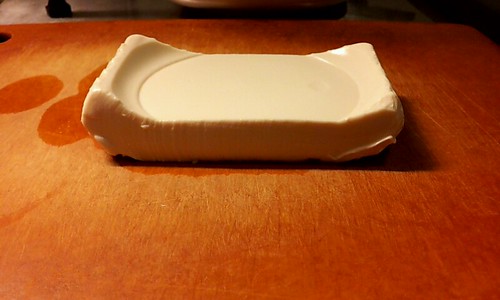
The picture above is some pressed tofu that I prepared in order to make five-spice tofu.
△ The recipe I have needs tofu that has had the water removed.
○ The recipe I have requires tofu that has had the water removed.
This tofu has that shape because I used a bowl filled with water to press it. The bowl wasn't as big as the tofu, so the edges didn't get pressed well. It's funny-looking, I thought.

If you need to improve your English, or if your work requires better English skills, I hope you will contact us about joining one of our classes!

2013/02/05

「If you were to ask...」の使い方


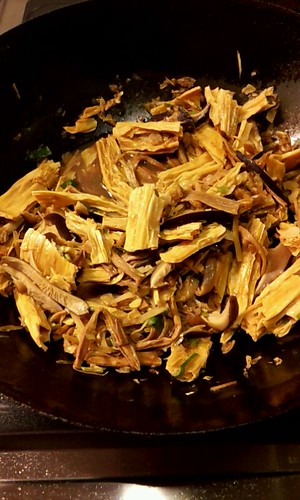
If you were to ask me what I was doing at 5 pm today, I would tell you that I was cooking. This is a dish called "Buddha's delight", and in Chinese you pronounce it like this:
  • Buddha's delight = luóhàn zhāi; a more English-like spelling could be "loo-oh-HAN-jai"
If you asked me for the Chinese characters, I'd give you these (both the traditional Chinese version and the simplified one used in mainland China):
  • 羅漢齋; 罗汉斋 (Buddha's delight = luóhàn zhāi)
The pattern I'm using is one that somebody asked me about the other day.
  • If you asked... = If you were to ask...
The meaning is to lightly offer some information. Sometimes (not always) there is a nuance that the presented information may be an interpretation of a situation rather than the complete truth or an uncontroversial description.

The difference between the two versions is this:
  • If you asked... (casual)
  • If you were to ask... (a bit more formal)
It's also possible to change the subject of the "if" clause.
  • If a stranger were to ask me where I was from, I might say "Mars".
If you asked me what was in the dish, I'd tell you that it's dried yuba, daylily flowers, shallots, garlic, ginger, green onions, mushrooms, vegetarian oyster sauce, sweet thick soy sauce, soy sauce, and black pepper.
  • daylily【名】《植物》萱草◆ユリ科
  • shallot【名】《植物》エシャロット(eschalot)
  • (definitions from Eijiro on the Web)
If you were to ask me to try it, I'd say "invite me over and I'll try to cook it for you!"

2013/01/30

Blendyは英語の使い方に注意した方が良い。


Before going to presentations at my university, I stopped by a supermarket to get some coffee. I wanted to drink some coffee so that I would be sure to stay awake through all of the presentations.
  • stay awake 目を覚ましている、起きている (definition from Eijiro on the Web)
No matter how exciting they are, if I am short of sleep, it's hard to listen to people speak Japanese for 40 minutes without dozing off.
  • short of ~が足りない[不足している]、~に達していない、~の手前で (definition from Eijiro on the Web)
Anyway, I bought this large bottle of Blendy, and I noticed the mistake:
× bottle coffee
○ bottled coffee
The point here is that the coffee has been bottled by the manufacturer. It's that fact, stated with a passive verb, that means we should say "bottled coffee".

"Bottle coffee" is strange. Similarly, we say "prepackaged bread" or "bagged garbage".

The coffee wasn't particularly delicious, but it did keep me awake. Next time I think I will try to  get canned coffee because it's hot. It's better for our health to drink warm beverages, and it's probably more delicious, too.

2013/01/29

「direction」と「directions」の違い


Recently I ate these instant noodles from Thailand. I like instant noodles from southeast Asia because I can find vegetarian-friendly ones and the spices are much more suitable for my palate.
  • suitable to one's palate = matching one's taste 
  • palate 味覚
  • suitable ふさわしい、適切な
I needed to check the instructions on the package to make sure that I didn't cook them too long. There's nothing worse than soggy instant noodles.
That's when I noticed that there was an English mistake!
× direction
○ directions
  • soggy【形】〔水で〕ずぶぬれの、びしょぬれの (definition from Eijiro on the Web)
  • soggy noodles のびた麺
Check the definitions of these two words (definitions from Eijiro on the Web):
  • direction 1. 管理; 2. 指図[命令]すること; 3. 方向、向き
  • directions 指示(書)、説明(書)
"Direction" means, according to WordNet 3.0, "a line leading to a place or point".

"Directions", with an "s", means the same thing as "instructions", or a series of steps given to teach someone how to do something.

There are other meanings for the word "direction". For example, there is what movie directors do. They give direction to actors, camera men, and so on in order to make a movie.

Despite the mistake, I had no trouble making these instant noodles, and they were delicious.

If you need some direction on how to improve your English, please ask me! I'd also be happy for you to join one of our classes. If you are having trouble finding our classroom, we can give you directions.

2013/01/22

形容詞の語順について


These nuts were a yummy snack. It's too bad that the English was wrong.
× Nuts Select!!!
○ Select Nuts
Adjectives basically go in front of nouns. Here, "nuts" is the noun, and "select" is an adjective. It means, according to WordNet 3.0, "of superior grade" or "selected or chosen for special qualifications".
select
【形】(definition from Eijiro on the Web)
    1. 厳選した、えり抜きの
    2. 上等の、優良な
    3.〔会員資格が〕限定された
    4.〔牛枝肉の等級が〕セレクトの◆米農務省の定めた規格で、一般に流通している三つの中では下位の等級。プライム(prime)、チョイス(choice)に比べて脂肪の少ない赤身肉。 
There are some interesting exceptional cases where an adjective comes after a noun in English. This Wikipedia page describes it well, along with examples:
http://en.wikipedia.org/wiki/Post-positive_adjective
Last week, I gave you some select posts from the past. I realized that this blog goes back to 2009. That's a good feeling, knowing that a lot of people have had a chance to study from these posts.

Anyway, this mistake is proof positive (see the Wikipedia link above) that some people need English classes. If that's you, please arrange an appointment with us for a free lesson!
  • proof positive 確証 (definition from Eijiro on the Web)

2013/01/16

2012の人気のある検索語


About 72 percent of you readers came to our blog last year from search engines.
  • search engine《イ》サーチ・エンジン、検索エンジン、検索ソフト (definition from Eijiro on the Web)
These are the things that people were searching for the most:

3. disgusting 使い方

There were plenty of disgusting things that happened last year, like the mass shootings in the US or the horrible gang rape of a woman in India. For me, the election of nationalists in Asia is pretty disgusting.
  • disgusting【形】むかつくような、うんざりさせる、胸が悪くなるような、実に嫌な、気持ち悪い、気色悪い、感じ(の)悪い、汚らわしい、〔気分的に〕最低な (definition from Eijiro on the Web)
  • mass shooting 銃乱射事件 (definition from Eijiro on the Web)
  • gang rape 輪姦 (definition from Eijiro on the Web)
  • nationalist【名】国家主義者、民族主義者、国粋主義者 (definition from Eijiro on the Web)
I managed to avoid cooking anything disgusting in 2012. Maybe my cooking skills are improving.

I hope that 2013 will be a less disgusting year geopolitically.
  • geopolitics【名】地政学◆【用法】単数扱い (definition from Eijiro on the Web)
Johnny wrote a good post about "disgusting" back in 2009:
http://upgradeenglish.blogspot.jp/2009/06/as-train-pulled-up-to-shibuya-station-i.html
2. wetty

Remember, in English we don't say "wetty". "Humid" is better. It's certainly not humid now. Check this post from 2010 about "wetty":
http://upgradeenglish.blogspot.jp/2010/06/wetty.html
1. パーカー 英語

I think we've said enough about hoodies lately. There's lots on the blog about it. Somehow, though, people are really interested in them. If you are interested, there's this article at Wikipedia about hoodies:
http://en.wikipedia.org/wiki/Hoodie

2013/01/15

2012の人気のあるポスト


It's interesting to see what attracts people to the blog. Today I want to recap the popular blog posts in 2012.
  • recap ~に再び帽子をかぶらせる、〔タイヤを〕補修して再生させる (definition from Eijiro on the Web)

The posts from last year that were the most popular were:

Our old posts continue to be read by a lot of people. The most popular posts last year were:

I understand why everyone likes hoodies (remember, "parka" means something else in English).
  • hoodie【名】フード付きスウェットシャツ、パーカー  (definition from Eijiro on the Web)
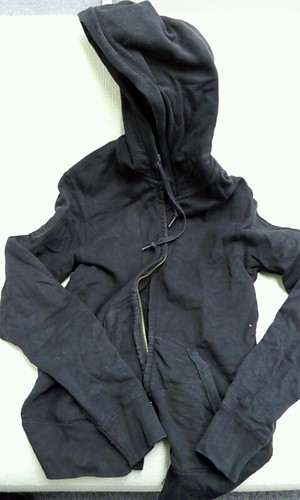
I can't make it through winter without them. I'm wearing one now. Tomorrow, while wearing a hoodie, I'll tell you about the popular search terms in 2012.

フォロワー