2009/11/13

ゲイナー モデル 見た? 会った?


This is one mistake I hear from time to time. "I met a famous actor." when he/she actually means he/she saw a famous actor. When we meet (会う) someone we say exchange words and converse. When we see (見る)someone we only see them from a distance and don't say anything to each other.


Anyway, even though Tokyo is a huge city we get a chance to bump into celebrities quite often. Just last week, I saw (not met) the model in the picture above. Do you know him? I think he looks like my oldest nephew but my wife and daughter don't think so. I have seen him in the same cafe a few times now. Sorry, I can't divulge my juicy secret because I don't want to intrude on his privacy.

He must be quite a looker. Some young ladies couldn't take their eyes off him. Some even peered in thru the shop window. It reminds me of Rod Stewart's song "Some guys have all the luck." The man's got style!!!


See the sample conversation below for further review if you are still unclear.

X A: I met Kimutaku last Saturday.
B: Really? What did you say to him?
A: Nothing. I didn't get a chance to talk to him.

B: You didn't meet him. You only saw him!


O A: I saw Kimutaku last Saturday.

B: Really? Where did you see him?

A: He was in Yoyogi park. He was with a film crew.

They were shooting a scene for his new drama.

B: Did you get a chance to meet him (face to face)?

A: No, I couldn't get within 100 feet of him.

B: That's too bad.


Vocabulary
bump into~ meet by chance.
I bumped into him in Shibuya. ~~渋谷で彼にばったり会った.

a juicy secret~ very interesting or colorful, esp. when slightly scandalous or improper: a juicy bit of gossip.

be a looker~ a very attractive person.
Cleopatra must have been quite a looker. Many men adored her.

can't take one's eyes off
~から目をそらすことができない、目が離せない、~に思わず見入ってしまう・
You can't take your eyes off her. : 君は彼女から目が離せない。
◆非常に魅力を感じているので目をそらすことができない

I just couldn't take my eyes off the screen. :
私の目はスクリーンにくぎ付けになった。/
私は食い入るようにスクリーンを眺め続けた。

2009/11/12

「feel well」と「feel good」の違いは何?

Someone asked me about the difference between "feel well" and "feel good". We were talking about work.

"Feeling good" is often about your mental condition. "Feeling well" is about your health.
× When I don't feel well about work...
~ When I don't feel good about work...
○ When I don't feel good about what's going on at work...
Sure, sometimes you may be sick of work. You might even have "sick building syndrome" from your office.
  • 厭き厭き (あきあき) (n,vs) sick of; bored (with); (definition from Edict)
  • sick building syndrome シックハウス症候群◆省エネのために換気量を少なくした高気密性のビルにおいて、建材や内装材から有害物質が出て濃度を増すために、ビル内で働く人に生じる病気。◆【略】SBS (definition from Eijiro on the Web)
However, this person wanted to talk about her job performance or how smoothly work was going.

Someone else asked the difference between "feel well" and "be well". When my doctor gave me a prescription, he said that I need to be sure to take all of the antibiotics.
  • 薬方 (やくほう) (n) prescription; (definition from Edict)
  • 薬箋 (やくせん) (n) prescription; (definition from Edict)
  • 抗生物質 (こうせいぶっしつ) (n,adj-no) antibiotics; (P); (definition from Edict)
"You may feel well," he said, "but you might not be completely well. That's why it's necessary to take all of them."

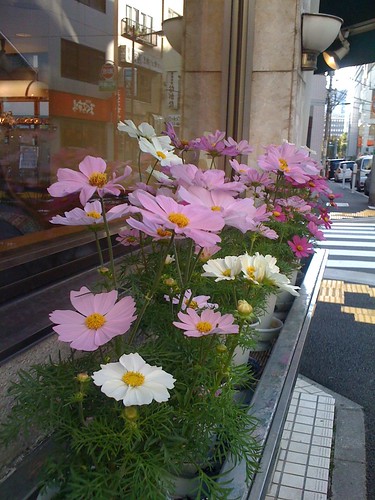
When I saw these flowers, I felt really good! I hope you do, too!

2009/11/11

「I am the flu」という文章は正しい英語じゃない。

When I was feeling under the weather, some people asked me:
× Are you swine flu?

feel under the weather
具合{ぐあい}が良くない (definition from Eijiro on the Web)
How can I be a disease? I'm a human being (at least most of the time)!
  • 病気 (びょうき) (n,adj-no) illness; disease; sickness; (P);
They mean to ask:
○ Do you have the swine flu?
○ No, I didn't have it.

have
a serious disease 重病{じゅうびょう}[重い病気{びょうき}]にかかっている (definition from Eijiro on the Web)
However, it is hard for me to wake up in the morning. Why?
× I am low blood pressure.
○ I have low blood pressure.

low
blood pressure《医》低血圧{ていけつあつ}
As a result, for the first 20 minutes of every day...
○ I am a zombie!
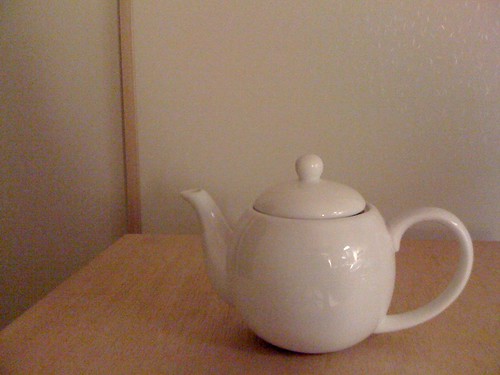
That lasts until I can drink some tea. I struggle to make it to this tea pot, brew some tea, and drink it. Slowly, I become a human being again.

2009/11/07

「sweets」の使い方

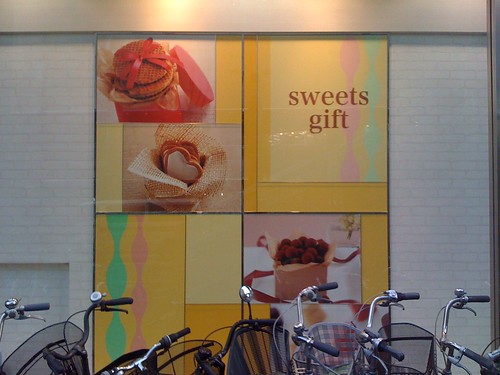
I was in Akabane earlier this week. On the way to where I was going, I passed Itoyokado. They had this sign in the window.

Many people make mistakes when talking about dessert. Specifically, the word "sweets" throws people off.
  • throw off 【句動】(人)をうろたえさせる (definition from Eijiro on the Web)
The problem is the "s" at the end of the word.
× I had a sweets. <- if you use "a", you have to use a singular noun, but "sweets" is plural
○ I had something sweet.
○ I had a pastry/candy/etc.
Now, there's nothing wrong with how Itoyakado used "sweets", but I suspect that is an accident. The sign reads:
× sweets, gift
○ sweets, gifts
Since they used "gift" as a singular noun, I guess they thought of "sweets" as a singular noun, too. Another possibility is that they meant "dessert gifts".

However, "sweets" has an "s", so it's plural. I seldom hear it used in the singular: "a sweet". Usually we say what kind: a candy, a pastry, a cake, a cookie, or something like that.

Anyway, you had better hurry up if you are planning on buying a gift; it appears Itoyokado only has one left. If other stores are like this, this isn't going to be a very successful holiday season.

2009/11/04

スターバックスコーヒー Bring My Cup??? 「マイカップを持っていこう。」 プロモーション


This Starbucks ad is telling us to bring my cup. 「マイカップ」 If you bring マイカップ, who will bring your cup? Do you think our cups are nicer than their cups? Is her cup bigger than his cup? (Are you confused yet? I am.)

The eco-friendly movement is gaining a foothold in Japan. That is a great thing because it is good for the environment. However it is another example of wasei~eigo. Other such examples include マイバッグ, マイカー, マイペース, マイホーム. Instead of マイ~, you should use my own/(one's) own. Look at the example below.

X A: John has マイカー
B: Why does John have your car? Did you lose your car gambling?
A: No, John has マイカー
B: Is he borrowing it for a while?
A: No, John has マイカー
B: I don't get it. Why would John be driving your car?

O A: John has his own car.
B: What kind of car does he drive?

So the next time you go to Starbucks be sure to bring your own cup, not マイカップ. Anyway, Starbucks extended their 50 yen discount (only if you bring your own cup or tumbler) until Christmas day. It's the season to be jolly, LA, LA, LA, LA, la-la-la-la.....


Vocabulary
gain a foothold
(~に)足掛かりを得る、(~に)足場{あしば}を固める、(~に)足固め{あしがため}をする

2009/11/03

「relief」と「release」の違いは何?

Last night around 5:30, my nose starting running. When I got home, I took some medicine, but I was still having trouble this morning.

After my Japanese lesson, I went to the drug store and bought this Chinese medicine. Taking the medicine helped.

Sometimes I hear from people in a similar situation; they often use the word "release". However, it's not the right choice. Check these sentences:
× After taking the medicine, I was release. <- sounds similar, but this is wrong
× After taking the medicine, I was relief. <- "relief" is a noun
○ After taking the medicine, I was relieved. <- OK!
○ I started to feel better, which was a relief. <- here's how to use the noun
"Release" has several meanings, like (definitions from Edict):
  • 解放 (かいほう) (n,vs) (1) release; unleashing; liberation; emancipation; setting free;
  • 取り離す (とりはなす) (v5s,vt) to release; to let go (of);
Here are some more definitions from Edict:
  • 安神 (あんしん) (adj-na,n,vs) relief; peace of mind;
  • 緩和 (かんわ) (n,vs) relief; mitigation; alleviation; relaxation; softening; (P);
  • すうっと (vs,adv) (on-mim) refreshed; relieved;
  • 和らげる (やわらげる) (v1,vt) to soften; to moderate; to relieve; (P); <- in English, "relieve" is a verb
Soon I'll go home and make some ginger tea. That will probably give me some more relief. The weather has suddenly become cooler, so everyone please take care! Don't catch a cold!

2009/10/31

「made by」「made from」「made of」「made with」の違いは何?

People seem to be confused about these phrases. Here's my advice.
  • made of - use this when the material hasn't been processed heavily
  • made from - use this when the material has been processed a lot
  • made with - use this when there are multiple ingredients or constituent parts
  • made by - use this to describe the method
× This curry was made of beans.
○ This curry was made with beans. <- there are a lot of ingredients in it!

× I made it from frying onions and ginger and then adding a masala paste that I bought at an import grocery store. <- onions are a processed ingredient, BUT...
○ I made it by frying onions and ginger and then adding a masala paste that I bought at an import grocery store. <- this is talking about the method

× The masala paste was made by spices, peppers, and garlic.
○ The masala paste was made from spices, peppers, and garlic. <- the ingredients in the paste have been processed a lot

2009/10/30

「how come」はどういう意味ですか?

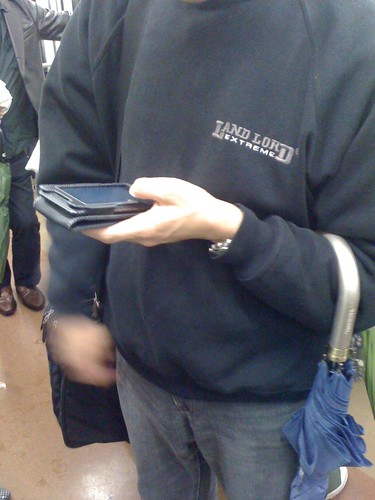
This guy I saw on the train the other day cracked me up.
  • crack up - 大笑いさせる、爆笑{ばくしょう}させる、ゲラゲラ笑いだす (definition from Eijiro on the Web)
His shirt says:
  • LAND LORD EXTREME
A landlord is a person who rents their property to others.
  • 大屋 (おおや) (n) landlord; landlady; (P); (definition from Edict)
In English-speaking countries, we often use "extreme" to describe something exciting or dangerous, like "extreme sports".
  • extreme sports - 極限スポーツ、アドレナリンを極端{きょくたん}に増加{ぞうか}させるような新種{しんしゅ}のスポーツ◆バンジー・ジャンプなど
What I want to know is how come somebody decided that there was anything extreme about being a landlord?

"How come" is a casual conversational way to say "why". Notice, though, that the usage is a bit different. In particular, notice the position of the subject and the verb.
  • how come どうして、なぜ◆【同】why
○ Why did you do that? (standard English)
× How come did you do that?
How come you did that? (casual spoken English)

○ Why are you standing there?
× How come are you standing there?
How come you are standing there?
Even more than the reason someone made such a sweatshirt, how come he decided to buy it? I'm warning you: don't wear anything with English writing unless you are sure about what it means.

フォロワー