ラベル 条件文 の投稿を表示しています。 すべての投稿を表示

2009/07/24

Another difficult 条件文

We talked about conditional sentences a while ago.
  • conditional sentence - 条件文
Here's a link to the last post in the series, for review:
http://upgradeenglish.blogspot.com/2009/06/if-you-are-sure-something-will-happen.html
Here's a more advanced conditional sentence which doesn't seem to follow the rules we talked about before. First though, we talked about this simple conditional sentence before:
If __(condition), __(main clause, result)__.
If it rains, we'll get wet. <- the condition is "it rains", and the result is "we'll get wet"
Here's more about first conditional sentences:
http://upgradeenglish.blogspot.com/2009/06/if-i-dont-hang-this-laundry-tonight-it.html
If __(s)__ __(be+v+infinitive)__, __(main clause)__.
(desired situation) , (prerequisite)
前提条件 (ぜんていじょうけん) (n) precondition; prerequisite; (definition from Edict)
If we are to stay dry, we have to take our umbrellas. <- Taking our umbrellas is necessary for staying dry. If we are going to stay dry, we have to take our umbrellas. (also OK)
This looks like future in the "if" clause. However, in this case, "are to stay dry" or "are going to stay dry" basically means "want to stay dry". So, you could say this:
If we want to stay dry, we have to take our umbrellas.
There... it looks like a regular first conditional sentence.

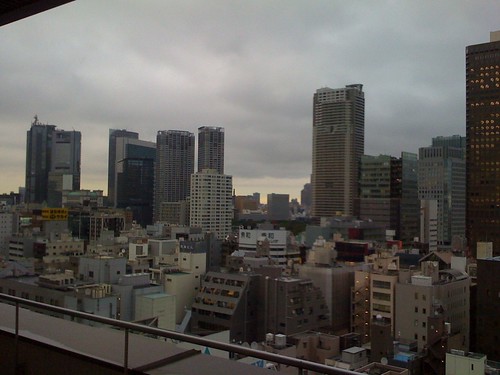
I was early to class on Thursday. The classroom is on the 14th floor of a building at Shiba-Koen, and I was enjoying the view of Shiodome. Then I thought to myself, "if I am to have a smooth class, I had better start to prepare for the lesson." Before I did that, though, I took this picture.

There's still a lot to be done tonight. If I am to sleep before 3am, I should finish this post and get on to the next task. Enjoy your weekend!

2009/06/18

If you are sure something will happen, use "when" instead of "if".


I thought of another tricky point which we should include in this discussion of conditional sentences. Sometimes we want to talk about a condition which we know will happen. In that case, you should use "when" instead of "if". "If" usually means that we aren't sure it will happen.
× If rainy season comes, I have to use the air conditioner to dry my house.
When rainy season comes, I have to use the air conditioner to dry my house.

× If it's been two minutes, take the noodles off the stove.
When it's been two minutes, take the noodles off the stove.
Both of these sentences are correct, but note the different meanings:
If you graduate, you will receive a degree. <- you may not graduate
When
you graduate, you will receive a degree. <- you will definitely graduate

If you arrive at the station, we can go to the restaurant together. <- I don't know if you will arrive or not... maybe we aren't yet sure where to meet
When
you arrive at the station, we can go to the restaurant together. <- We have plans, and I know you will come. I'll be waiting for you.
I was at Shiodome City Center this evening. When I'm there, I usually go to the soup restaurant "Chowders" to get a cup of garden vegetable soup. It's the only vegetarian soup on their menu, I think. The rest have some kind of animal-based bullion. However, today I noticed that a "taco rice" restaurant there has vegetarian-friendly taco rice! If I can remember next time, I'll order it.

By the way, "taco rice" is Japanese English. Native speakers can probably guess what it is, but I'd never heard of it before coming to Japan.
http://en.wikipedia.org/wiki/Taco_rice

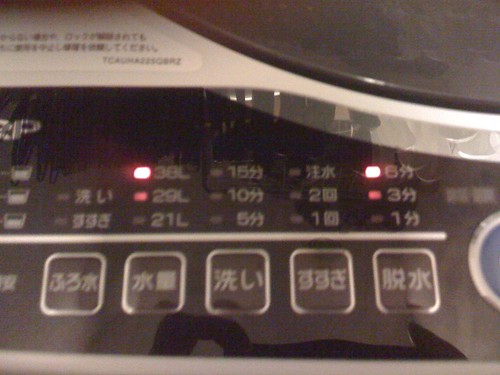
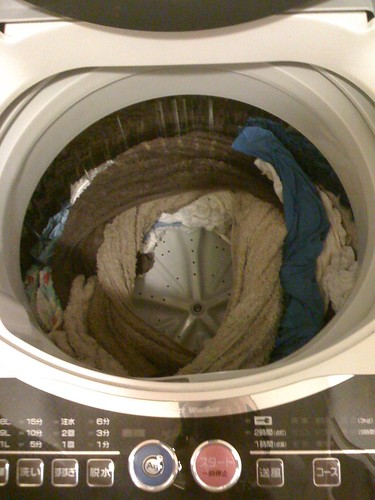
When this laundry is done, I have to hang it. Before that, I want to eat a snack, so it's time to end this post. If you are tired of hearing about my laundry, please tell me!

Here's the whole list of posts about conditional sentences:
http://upgradeenglish.blogspot.com/2009/06/if-you-dont-understand-conditional.html
http://upgradeenglish.blogspot.com/2009/06/if-you-dont-get-to-station-before-last.html
http://upgradeenglish.blogspot.com/2009/06/if-you-put-hot-food-in-fridge-you-risk.html
http://upgradeenglish.blogspot.com/2009/06/if-i-dont-hang-this-laundry-tonight-it.html
http://upgradeenglish.blogspot.com/2009/06/if-i-were-empress-police-would-stop.html
http://upgradeenglish.blogspot.com/2009/06/if-i-had-stayed-out-bit-longer-this.html
http://upgradeenglish.blogspot.com/2009/06/if-you-arent-careful-you-might-make.html
http://upgradeenglish.blogspot.com/2009/06/what-would-you-have-chosen-as-your.html

What would you have chosen as your beverage if you had eaten lunch at this Indian restaurant?


I'm still talking about conditional sentences. Here's the whole list of posts about conditional sentences so far:

http://upgradeenglish.blogspot.com/2009/06/if-you-dont-understand-conditional.html
http://upgradeenglish.blogspot.com/2009/06/if-you-dont-get-to-station-before-last.html
http://upgradeenglish.blogspot.com/2009/06/if-you-put-hot-food-in-fridge-you-risk.html
http://upgradeenglish.blogspot.com/2009/06/if-i-dont-hang-this-laundry-tonight-it.html
http://upgradeenglish.blogspot.com/2009/06/if-i-were-empress-police-would-stop.html
http://upgradeenglish.blogspot.com/2009/06/if-i-had-stayed-out-bit-longer-this.html
http://upgradeenglish.blogspot.com/2009/06/if-you-arent-careful-you-might-make.html
Yesterday, I asked you two questions:
If we see them, we know that rainy season is here. <- which type of conditional is this? <- It's zero conditional.
If I had been more careful, the picture wouldn't have come out blurry.
Sorry! <- which type of conditional is this? <- It's third.
One common mistake with conditional sentences is using "would". Look at these sentences:
× If there would be time, I would like to see it. <- "would like" means "want"; it's not the "would" from a hypothetical situation.
○ If there is time, I would like to see it. <- this is actually first conditional. It's describing a real future situation.

× If you would live somewhere in another country, where? <- we usually don't put "would" in the "if" clause
○ If you could live in another country, where would you live? <- "would" usually goes in the main clause

× If I would have big big money, I want to try it. <- this is supposed to be second conditional
○ If I had a lot of money, I would try it. <- also, don't use the phrase "big money"

× If I go to a museum, I would prefer pictures than art. <- this is talking about usual preference, not a specific case...
○ If I go to a museum, I prefer photos to paintings or other kinds of art. <- ... so don't use "would". This is zero conditional.

× If it would have been me, I went to the police. <- "would" is in the wrong place, and the tense in the main clause is wrong
○ If it had been me, I would have gone to the police. <- third conditional!
For lunch today, I had mixed bean curry (mostly lentils), which is usually called "dal" in most South Asian languages.
http://en.wikipedia.org/wiki/Dal
  • レンズ豆 (レンズまめ) (n) lentil; (definition from Edict)
I sometimes chat with the friendly Nepalese guys who work there. They speak a bit of English, but not so well. One of them always comments about my sunglasses, which he first told me were "very cute!" I was a bit confused, so then in Japanese he said 「スマート、スマート!!」. I thanked him. If I don't understand what he's saying, I speak slowly and ask him to explain again. Usually we manage to communicate. <- which conditional?

Anyway, when I was almost finished eating, he said "chai, OK?" when of course he means "would like some chai?" I said "sure". If you had been me, what would you have ordered? A smooth yogurt drink (lassi?)? Ice tea? <- which conditional was that?
http://en.wikipedia.org/wiki/Lassi
We might be finished talking about conditional sentences for now. If I think of something else I want to say tomorrow, though, I might talk about conditionals again. <- which conditional is this?

Until tomorrow...

2009/06/17

If you aren't careful, you might make these mistakes.


If it weren't so late, today's post would be longer. If you haven't done it already, you should look at the previous posts on conditional sentences:
http://upgradeenglish.blogspot.com/2009/06/if-you-dont-understand-conditional.html
http://upgradeenglish.blogspot.com/2009/06/if-you-dont-get-to-station-before-last.html
http://upgradeenglish.blogspot.com/2009/06/if-you-put-hot-food-in-fridge-you-risk.html
http://upgradeenglish.blogspot.com/2009/06/if-i-dont-hang-this-laundry-tonight-it.html
http://upgradeenglish.blogspot.com/2009/06/if-i-were-empress-police-would-stop.html
http://upgradeenglish.blogspot.com/2009/06/if-i-had-stayed-out-bit-longer-this.html
Yesterday, I asked:
If I had finished our study of conditional sentences today, we wouldn't be studying conditional sentences tomorrow. <- what kind of conditional sentence is this?
So here's the tricky thing:
If I had finished our study of conditional sentences today, <- "if" clause, past perfect we wouldn't be studying conditional sentences tomorrow. <- main clause, "would" + v <- WAIT, "WOULD" + V ?!?!
"Nick, didn't you say past perfect in the 'if' clause goes with 'would' plus present perfect tense?" I hear everyone asking me. That's USUALLY true, but not always. It's important to think about the meaning:
If I had finished our study of conditional sentences today, <- this is about the past
we wouldn't be studying conditional sentences tomorrow. <- but the reaction is in the future
That means this sentence is really like second conditional. It describes a hypothetical reaction in the future to an unreal past condition. Because of this, sometimes I see mistakes like this:
× If it hadn't been raining when I came in, I wouldn't have been wet now.
○ If it hadn't been raining when I came in, I wouldn't have gotten wet. <- third conditional
○ If it hadn't been raining when I came in, I wouldn't be wet now. <- second conditional
Look at this tricky one:
× If she didn't come, she would have some kind of problem. <- this is strange. It sounds like she will come, and in doing so will avoid a problem. This is correct second conditional grammar, but it's not what the speaker means.
○ If she didn't come, she must have had some kind of problem. <- She didn't come. The speaker guesses that the reason is she had some kind of problem. This is about a fact, so it's zero conditional. Notice that because of the auxiliary verb, "must", the tense changes from past to present perfect
You might have been happier if I had shown you the more common conditional sentence mistakes today. If I hadn't left you with that question yesterday, I would have talked about those more common mistakes today. However, that will have to wait until tomorrow.

In the meantime, look at these hydrangeas. If we see them, we know that rainy season is here. <- which type of conditional is this?
  • 紫陽花 (あじさい) (n) hydrangea; (definition from Edict)
If I had been more careful, the picture wouldn't have come out blurry. Sorry! <- which type of conditional is this?

Talk to you tomorrow!

2009/06/16

If I had stayed out a bit longer this evening, I would have gotten soaked.

Last week, I was talking about conditional sentences. We're not quite finished yet. First, you might want to review what I wrote last week:
http://upgradeenglish.blogspot.com/2009/06/if-you-dont-understand-conditional.html
http://upgradeenglish.blogspot.com/2009/06/if-you-dont-get-to-station-before-last.html
http://upgradeenglish.blogspot.com/2009/06/if-you-put-hot-food-in-fridge-you-risk.html
http://upgradeenglish.blogspot.com/2009/06/if-i-dont-hang-this-laundry-tonight-it.html
http://upgradeenglish.blogspot.com/2009/06/if-i-were-empress-police-would-stop.html
Today we've got to talk about third conditional. The definitions below are from 英辞郎 on the web and Edict.

In my last post, I asked you:
If I had been thinking, I would have taken a picture. <- which type of conditional sentence is this?
The answer is third conditional! Like second conditional, it's used to talk about hypothetical situations, too. The difference is that these hypothetical situations are past hypothetical situations.

The grammar for third conditional is usually like this:
If you hadn't found my blog, <- "if" clause, past perfect tense
you wouldn't have been able to read my posts about conditional sentences last week. <- main clause, "would" + present perfect tense
You can use third conditional to talk about an alternate past history:
If the car had been invented by a Japanese inventor, would Tokyo have turned out like Detroit today?
invent = 開発する? (is this right in this case?)
I wonder how things would have been different if Kennedy hadn't been assassinated.
assassinate 【他動】~を暗殺{あんさつ}する、傷つける
You can use third conditional to talk about your regrets:
If I had studied Chinese characters harder in Taiwan, I would have had an easier time when I came to Japan.
If Bush hadn't been elected president, maybe there wouldn't have been a war in Iraq.
選ばれる be elected
You can use third conditional to talk about lucky situations:
If I hadn't come to Japan, maybe I wouldn't have met you.
If you hadn't studied English before, you wouldn't have been able to read this sentence. <- but you just did, and that's lucky for me and you, both!
Around 8:30 pm, I walked outside to get my bicycle and ride home. I noticed that the ground was wet, but it wasn't raining at that time. I thought about going to Bic Camera. That's because I want to get some things like a new wireless internet card for my laptop and some new cables for my audio mixer. However, my stomach was growling, and I decided to go home directly instead to eat.
  • My stomach's growling. おなかがなっている。
I arrived at my building, parked my bike, and took the elevator up to my apartment. When I got in the apartment and looked out the window, the scene had changed a lot! It was pouring!
  • in pouring rain 土砂降りの[降りしきる]雨の中で
If I had gone to Bic Camera, I would have gotten soaked in the rain. I had been thinking about this post all day. "What example am I going to use?" I had been thinking. I was going to say "if I hadn't taken my rain suit today, it would have rained cats and dogs." That could still be true. I took the rain suit, and of course, it didn't start raining until I got home. Still, I'm glad I didn't have to ride my bicycle in the rain today!

If I had finished our study of conditional sentences today, we wouldn't be studying conditional sentences tomorrow. <- what kind of conditional sentence is this?

However, we're not done. Tomorrow, we'll look at some mistakes with conditional sentences. Take care!

2009/06/12

If I were the Empress, the police would stop traffic for me, too.


I had an interesting experience this morning on the way to meet someone, but first, let's review. All week, I've been talking about conditional sentences:
http://upgradeenglish.blogspot.com/2009/06/if-you-dont-understand-conditional.html
http://upgradeenglish.blogspot.com/2009/06/if-you-dont-get-to-station-before-last.html
http://upgradeenglish.blogspot.com/2009/06/if-you-put-hot-food-in-fridge-you-risk.html
http://upgradeenglish.blogspot.com/2009/06/if-i-dont-hang-this-laundry-tonight-it.html
You might be able to guess that today I want to talk about second conditional. As I said back on Tuesday, second conditional is about a condition which is not real or impossible. Sometimes we call this a hypothetical situation.
  • hypothetical situation 仮定{かてい}[仮想{かそう}]の状況
The grammar for second conditional is usually like this:
If I were you, <- "if" clause, past tense
I would try to master conditional sentences. <- main clause, "would" + v
The definitions below are from 英辞郎 on the web.

Textbooks use it to talk about situations that just aren't real:
If I were a 3-meter tall woman with four arms, I'd have trouble getting dates. <- get a date デートの相手{あいて}を見つける[つかまえる]
If my computer were made of cake, my fingers would be so dirty now.
You can use second conditional to express your wishes:
If there were 26 hours a day, I could get more done. <- get something done 手を打つ、策を講じる
If I had 100 million yen, I could easily retire somewhere in southeast Asia.
You can use second conditional to give advice.
If I were you, I'd become a vegetarian right away. <- sorry, I can't help but give you this advice :)
If I were you, I'd go back and review all of the posts on conditional sentences. <- really!
You can use second conditional to express relief:
If we lived in New York, we would have to worry about being mugged. mug ~を襲って金品{きんぴん}を奪う
If we lived in the Imperial Palace, we'd have to be more careful about everything we said.
So, speaking of the Imperial Palace, back to the story I mentioned at the beginning of this post. I was riding my bicycle on my way to meet someone. As I was riding through Otemachi, I saw many people at the intersection ahead of me. When I got there, I had to stop. The police had stopped all traffic: cars, trucks, bicycles, and pedestrians. One older man on the corner was yelling at the police, who ignored him. I looked far up the street and saw flashing lights.

"Ah, this must be some kind of VIP with a police escort," I thought. One motorcycle cop roared into the intersection, looked around, and sped off. He was followed by another. Then a black car drove up, and a man in a black suit checked out every direction and drove off. Finally, the whole motorcade came through the intersection. After two more police motorcycles, some police cars, and black cars, there was a Rolls Royce. Sitting in the back was the Empress. She was smiling and waving at everyone. The old man had stopped yelling. Her car proceeded towards the Imperial Palace, and after a minute, we were allowed to proceed. As a result, I was five minutes late to my appointment.

If I had been thinking, I would have taken a picture. <- which type of conditional sentence is this?

Anyway, like I said in the headline, if I were the Empress, the police would stop traffic for me, too. As it is, I have to yell at taxi drivers who try to run me over by myself, without any help from the police.

The picture for today's post is an idol of Ganesh, a Hindu god. This idol was given by Indian friends in California. If I were Hindu, I could explain it better. Unfortunately, I just know that it's auspicious for beginnings. I hope this picture will be good luck for your English studies. If you were Hindu, you would think so, too.

Have a nice weekend!

If I don't hang this laundry tonight, it will be a problem.


I've been talking about conditional sentences for the past three days:
http://upgradeenglish.blogspot.com/2009/06/if-you-dont-understand-conditional.html
http://upgradeenglish.blogspot.com/2009/06/if-you-dont-get-to-station-before-last.html
http://upgradeenglish.blogspot.com/2009/06/if-you-put-hot-food-in-fridge-you-risk.html
Today, I want to talk about first conditional. We use first conditional to talk about:
  • a condition that really might happen sometime in the future
  • a real reaction to that possible condition
The grammar for first conditional is often (though not always) like this:
If you learn to use conditional sentences well, <- "if" clause, present tense
it will be useful. <- main clause, "will" + v
You can use it when you are making plans. The definitions below are from 英辞郎 on the web:
If the weather isn't good tomorrow, we'll have to cancel the hiking trip.
If I can find the time, I'll meet you at a cafe.
  • find the time to ~する時間{じかん}を作り出す・Somehow, she also finds time to do fifty sit-ups every day. : 彼女は毎日どうにか腹筋運動を50回する時間を作り出している。
You can use it when you are making threats:
If your factory makes another mistake, we will stop doing business with you.
  • do business 営業{えいぎょう}する、商売{しょうばい}する、ビジネスを行う、商談{しょうだん}する
If you don't treat me better, I'll leave you.
You can use it when you are making promises:
If you give us a good price, we'll definitely choose your factory.
If you help me, I'll help you in return.
  • in return 返礼{へんれい}[返報{へんぽう}・お礼・お返し・見返り]として
Simply, you can use it to talk about one particular future situation:
If I don't go to bed soon, I'll have trouble getting up in the morning. <- true!
If I forget to hang this laundry, it will definitely mildew. <- this time, this particular load of laundry, also true!
  • mildew うどん粉菌、白かび、うどん粉病
    However, compare that to yesterday's discussion of zero conditional:
    If I forget to hang wet laundry, it mildews. <- every time
    Tomorrow is my dad's birthday. If I forget to call him, his feelings will be hurt. If I call in the morning, I wonder if he'll be at home or outside having dinner with my mom. Because the people in my family like to talk on the phone, if I call in the morning, maybe I'll be late to my first appointment. If I call him after class though, he'll be on his way to work and won't have time to talk. Hmm... maybe I'll just have to call in the morning for a quick congratulations, and then call again later on the weekend when we both have more time.

    In the meantime, I had better go hang that wet laundry. If I don't, it will definitely stink in the morning.

    If you don't understand this explanation, I hope you will ask me about it.

    2009/06/10

    If you put hot food in the fridge, you risk spoiling the other food in there.


    I've been talking about conditional sentences the past two days:
    http://upgradeenglish.blogspot.com/2009/06/if-you-dont-understand-conditional.html
    http://upgradeenglish.blogspot.com/2009/06/if-you-dont-get-to-station-before-last.html
    First, to answer the questions from yesterday:
    If I hadn't been there to help him, he might have had to sleep on the street. <- third conditional It's late now. If I don't go to bed, I'll be really sleepy tomorrow. <- first conditional
    Today, I want to talk more about zero conditional. About grammar, zero conditional often uses present tense in both the "if" clause and the main clause.
    If you speak English <- "if clause", present tense (現在形) traveling abroad is more convenient. <- main clause, present tense (現在形)
    We often use it for things related to science:
    If water reaches 100 degrees, it boils. (boil = 煮える, 沸く)
    If surgeons do not disinfect their instruments, their patients get infections. (surgeon = 外科医; disinfect = 殺菌する?; patient = 患者; infection = 感染)
    We use it for facts:
    If you live in Tokyo, you have to deal with crowds. (deal with = 扱う; crowd = 群衆)
    If you live in West Texas, you have to deal with dust storms. (dust storm = 砂塵嵐)
    We use it for rules:
    If you speed while driving and the police see it, they usually give you a ticket. (ticket = 違反切符)
    In tennis, if you allow the ball to bounce twice on your side of the court, you lose the point.
    We also use it for things related to our habits or characters:
    If I don't listen to music during the day, I get grumpy. <- it's true! (grumpy = イライラする)
    If I don't have a cup of tea in the morning, I remain a zombie for an extra half hour. <- it's true, too!
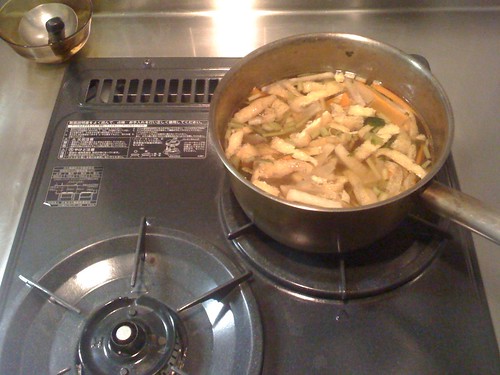
    I cooked some vegetable soup for dinner, which I put buckwehat noodles into. Right now, the soup is sitting on the stove. It's cooling down. In a while, I'll put it in another container and put it in the fridge. The reason is that if you put something hot in the fridge, it heats the other food there. That increases the risk of food spoiling.

    I have a weak stomach. If I eat something that isn't really fresh or has gone slightly bad, my digestive system is a mess for days. As a result, I don't want to put the soup in the fridge right away.

    If you ever have a question, you should ask me.

    2009/06/09

    If you don't get to the station before the last train, you have to take a taxi.

    The headline is zero conditional. Yesterday, I started to explain conditional sentences (条件文).

    http://upgradeenglish.blogspot.com/2009/06/if-you-dont-understand-conditional.html

    Remember that conditional sentences have two parts: the "if" clause, which describes a condition, and the main clause, which describes the reaction.
    If you don't get to the station before the last train, <- "if" clause, condition
    you have to take a taxi. <- main clause, reaction
    Zero conditional is used to talk about what happens every time, given a certain condition which happens more than once. We use it to talk about facts.
    If you don't get to the station before the last train, <- this happens sometimes
    you have to take a taxi. <- this is always true, unless, of course, you stay in a hotel, walk, or something else...
    First conditional is used to talk about what will happen in the future, given a certain real condition. The main clause is a real reaction, not imaginary.
    If you don't get to the station before the last train, <- today, this time (notice it looks the same as the example above)
    you will have to take a taxi. <- today, this time, in the future
    Second conditional is used to talk about what might happen in the future, given a certain condition which is very low probability or impossible. The main clause is the reaction to that impossible condition.
    If you didn't get to the station before the last train, <- but I know you will get to the station before the last train
    you would have to take a taxi. <- this doesn't matter, because I know you will get to the station
    Third conditional is used to talk about what might have happened in the future had a certain condition happened in the past. In fact, the condition didn't happen.
    If you hadn't gotten to the station before the last train, <- but you did get to the station
    you would have had to take a taxi. <- this is history, though. In fact, you got to the station, so you didn't have to take a taxi.
    After class tonight, I rushed over to Roppongi. I wanted to see a Swiss electronic musician's performance. His name is Andrea Valvini. We have been having an email discussion for a few months, and he has been in Japan for a week doing a tour. Fortunately, I saw the last 30 minutes of his performance. We talked while he was packing up his things. After he finished packing, we went to the station. Unfortunately, the last train to Tsukiji, where he was staying, had left.

    As a result, we took a taxi to Tsukiji. He was staying at a temple there. He said you have to be inside at midnight. We arrived there close to 12:30. The gates were shut and all of the lights were out. Fortunately, I had my bicycle safety light on my keychain, so I used it to get the attention of the guard sitting inside, who was a small old man, probably around 70. He looked out, saw two foreigners (and Andrea is REALLY BIG), and then went back inside.

    I shouted in Japanese "すみません" and then he came out again. So I told him in Japanese that we had a small problem.

    "This foreigner already has his luggage inside. Could you open the gate?" After he realized I could speak Japanese and understood the situation, he asked Andrea's name, we told him, he smiled, checked his list, and let Andrea inside. Andrea was saved.

    After I left him at the temple, I had to walk from Tsukiji to Kayabacho where I had left my bicycle. I got it, and now I'm home writing this post.

    If I hadn't been there to help him, he might have had to sleep on the street. <- which conditional is it?

    It's late now. If I don't go to bed, I'll be really sleepy tomorrow. <- and this one? Which conditional is it?

    Good night!

    2009/06/08

    If you don't understand conditional sentences, you are in luck! (条件文)


    Yes, you're in luck!
    in luck 運がよくて、運が向いて
    ・Oh, you're in luck! We have one left in the back. : ああ、あなたは運がいいですね。一つだけ在庫があります。
    ・I'm in luck! : これはついてる、何とラッキー!
    As I said last week, I'm going to spend a week discussing conditional sentences. If you ask me which parts of English give students the most trouble, I will tell you that conditional sentences is one of them.
    • conditional sentence 条件文
    There are four types of conditional sentences, which we can label this way: zero, first, second, and third. Look at some examples.
    • If I'm hungry, I eat something. (zero)
    • If I am hungry, I will eat something. (first)
    • If I were hungry, I would eat something. (second)
    • If I had been hungry, I would have eaten something. (third)
    If I ask you, can you tell me the differences between these sentences? If you can't, that's OK, because I'm going to explain them over the next few days.

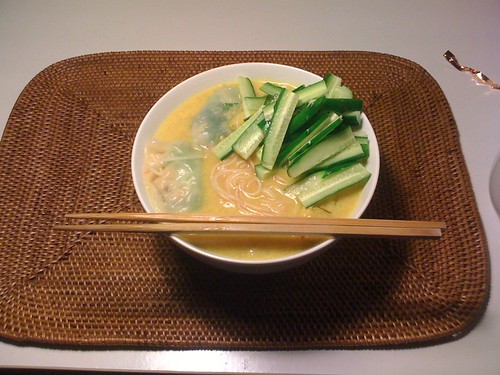
    In the meantime, take a look at the dinner I prepared for myself this evening. It's laksa, which is a southeast Asian dish, on egg noodles with vegetarian dumplings and cucumber. The laksa included some nice tumeric from Mumbai, nice onions from Tsukiji, and nice dried lemongrass from California. Here's more about laksa:
    http://en.wikipedia.org/wiki/Laksa
    If you could eat like this every day, would you become a vegetarian, too? OK, I know you like to eat fish or something, but if you asked me, I would be happy to give you advice on being a vegetarian. More on conditional sentences tomorrow.

    フォロワー