2009/08/31

関係代名詞の使い方, part 20: whom

I think I've said almost everything (that) I want to say about relative pronouns. The last thing I want to mention is "whom".

The rule for "whom" is that you can use it when it represents the object of the verb in the relative clause, like this:
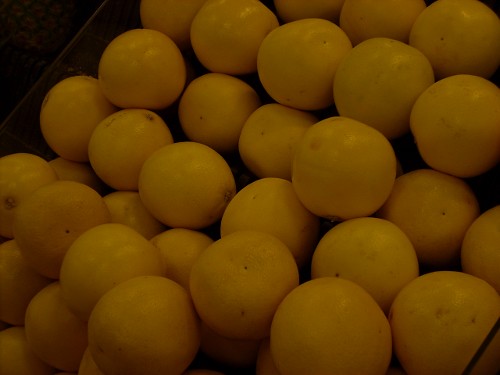
  • The guy whom I met this morning wears glasses that are as yellow as these grapefruits.
The truth is, though, that many native speakers don't bother using "whom" nowadays.
  • We don't bother to learn about the details of other cultures until we have to. 私たちは必要に迫られるまで他の文化の細かいことなどわざわざ知ろうとはしない。(example from Eijiro on the Web)
There are two alternatives. The first is to use "who".
  • The guy who I met this morning wears glasses that are as yellow as these grapefruits.
The second is to leave out the relative pronoun. Since it represents the object, we can do that if it's not in a nonessential relative clause.
  • The guy I met this morning wears glasses that are as yellow as these grapefruits.
The friends (whom) I saw yesterday were visiting Japan from France. They live in Lyon. We had lunch in Shibuya, and I had a chance to play with their five-year-old son. He speaks French and Japanese, so I did my best to communicate with him in Japanese. It turned out that he loved riding piggyback, so I alternated between carrying him on my shoulders and making him "fly" down the sidewalk.
  • 肩車 (かたぐるま) (n) riding piggyback; riding on someone's shoulders;
We were having too much fun; at one point, I almost hit some 20-something women. The women (whom) I almost hit, though, were kind enough just to laugh.

You are the people (whom) I want to please with this blog, so let me know if you have any questions.

2009/08/28

関係代名詞の使い方, part 19: 関係代名と前置詞

Last time I was talking about stranded prepositions and relative clauses.
  • stranded preposition 残置前置詞{ざんち ぜんちし}
http://upgradeenglish.blogspot.com/2009/08/part-18.html
Like I said yesterday, native speakers use this pattern all the time, even though some really strict teachers don't like it.

Start with a sentence with a prepositional phrase.
  • prepositional phrase 前置詞句
  • I was studying programming in this room on Sunday evening.
Take the object of the preposition, and make a new sentence
  • prepositional object 前置詞付き目的語
  • This room is a laboratory at my university.
Now put the two together with a relative pronoun.
  • This room, which I was studying programming in on Sunday, is a laboratory at my university.
The preposition is said to be "stranded" because there's no object right after it.
  • 擱座 (かくざ) (n,vs) running aground; stalled; stranded;
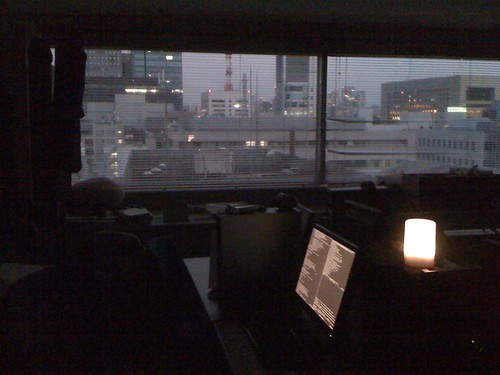
I turned off the lights and just used a lamp. That's more comfortable than the florescent lights. The lights (which) I turned off were fluorescent. Maybe I'll be doing the same thing this Sunday.
  • 蛍光灯 (けいこうとう) (n) (1) fluorescent lamp; fluorescent light;
Enjoy your weekend!

2009/08/27

関係代名詞の使い方, part 18: 関係代名と前置詞

Another tricky thing about relative clauses is when prepositions are also involved. Look at these sentences:
I often eat at this restaurant.
It serves this dish.
This restaurant, at which I often eat, serves this dish. <- less natural
This restaurant, which I often eat at, serves this dish. <- more natural
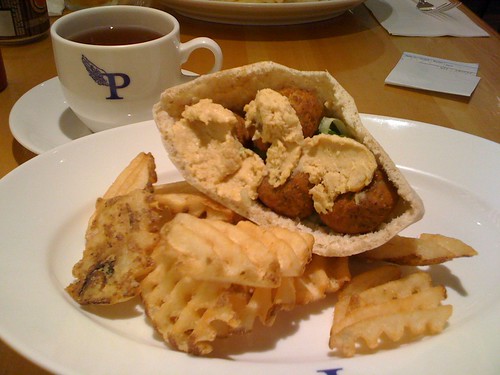
The dish is called falafel. It's made from chickpeas.
  • falafel ファラフェル◆ひよこ豆のコロッケ、もしくはひよこ豆のコロッケをピタパンなどに挟んだサンドイッチ
Now look at these sentences.
That is a pita.
The falafel is served in it.
That is a pita that the falafel is served in.
The truth is that strict teachers say this kind of sentence is wrong. The "at" in that sentence is called a "stranded preposition".
  • stranded preposition 残置前置詞{ざんち ぜんちし}
There's a whole page about it on Wikipedia, but that page might be kind of tough to understand:
http://en.wikipedia.org/wiki/Preposition_stranding
Anyway, even though some strict teachers say it's not right, native speakers use them ALL THE TIME. I recommend this pattern for you, too.

You might remember this topic from when I was talking about "where". Now is a good time to go back and review that post:
http://upgradeenglish.blogspot.com/2009/08/part-6-where.html
More on relative pronouns and prepositions soon.

2009/08/24

関係代名詞の使い方, part 17: 関係代名詞は省略できる?

Here's a fourth rule about leaving out relative pronouns.
You can leave out these relative pronouns: that, which, who, where, when.
You cannot leave out these relative pronouns: whose, what.
Take a look at this rule in action.
  • in action - 活動中{かつどう ちゅう}で、行動中{こうどう ちゅう}で、作動中{さどう ちゅう}で、実施中{じっし ちゅう}
○ There's something that I feel really lucky to find out today.
○ There's something I feel really lucky to find out today.

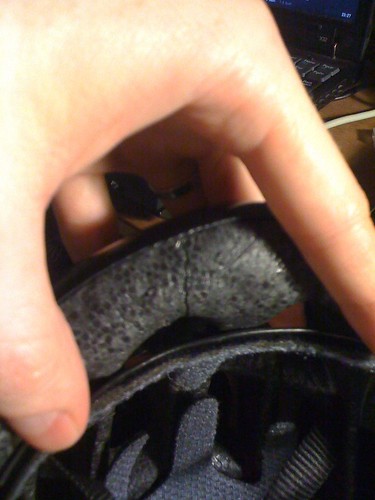
○ The thing which I'm holding in this picture is my helmet.
○ The thing I'm holding in this picture is my helmet.

○ Discovering my helmet had completely broken is what I feel lucky about.
× Discovering my helmet had completely broken is I feel lucky about.

○ The place where the helmet is broken is the front center.
○ The place the helmet is broken is the front center.

○ Someone whose helmet had broken but hadn't realized it would be in a dangerous situation.
× Someone helmet had broken but hadn't realized it would be in a dangerous situation.
Still, I'm surprised that a helmet which hasn't been in an accident can break like this. If it can break just through regular use and maybe being dropped a few times, I think I can't expect it to protect my head in a crash. I'm going to replace it with a hard shell helmet that won't break. Anyway, I consider it lucky to have found out this way rather than in a crash.

If there are some questions (which) you have about relative clauses, please send me an email!

2009/08/23

関係代名詞の使い方, part 16: 関係代名詞は省略できる?

Here's a third rule about leaving out relative pronouns:
It's OK to leave out "which" when the relative clause is an essential one. It's not OK to leave out "which" in a nonessential relative clause.
For a review on essential and nonessential relative clauses, see this post:
http://upgradeenglish.blogspot.com/2009/08/part-9-comma-or-no-comma.html
Now look at some examples:
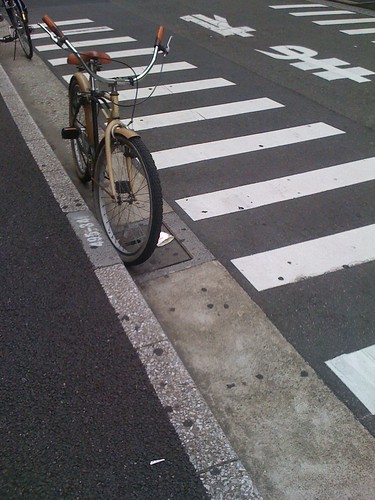
○ I took a photo of a bike which I feel is strange.
○ I took a photo of a bike I feel is strange.

× This photo, I took near Shinochanomizu Station, is of a type of bicycle I've seen a lot lately.
○ This photo, which I took near Shinochanomizu Station, is of a type of bicycle I've seen a lot lately.

× The bicycle, has motorcycle styling, really puzzles me.
○ The bicycle, which has motorcycle styling, really puzzles me.
  • styling スタイリング、あるスタイルを与えること、様式{ようしき}、整髪{せいはつ}
  • 迷わす (まよわす) (v5s,vt) to puzzle; perplex; bewilder; delude; mislead; fascinate;
× The handlebars, point up and outwards, seem really hard to grasp.
○ The handlebars, which point up and outwards, seem really hard to grasp.
  • handlebars - ハンドル
  • 把持 (はじ) (n,vs) grasp; hold; grip;
  • 握る (にぎる) (v5r,vt) to grasp; to seize; to mould sushi; to mold sushi; (P);
  • 外向き (そとむき) (n) facing outward;
  • 外形的 (がいけいてき) (adj-na) external; outward;
○ I can't imagine how the owner of the bicycle which I photographed rides it.
○ I can't imagine how the owner of the bicycle I photographed rides it.
If I find one (which is) at a bike shop, I'm going to try it to see just how uncomfortable it is. I'm really curious about it.

Enjoy the last few hours of the weekend!

2009/08/20

関係代名詞の使い方, part 15: 関係代名詞は省略できる?

Here are the questions which I left you with yesterday.
Here are the questions I left you with yesterday.
leave A with B (definition and examples from Eijiro on the Web)
AをBに預ける[託す・任す]
She left the wallet she found with the station staff. : 彼女は偶然見つけた財布を駅員に届けた。
The deliverer left the package with me to give to the neighbor. : 配達人はその包みを隣の家の人に渡すよう私に託して行った
First, remember the second rule:

In the case of a relative pronoun followed by a "be" verb, both may be left out.
  • This photo, which was taken while walking along the Sumida River at night, shows the reflection of the lights on the water.
  • × This photo, was taken while walking along the Sumida River at night, shows the reflection of the lights on the water.
  • ○ This photo, taken while walking along the Sumida River at night, shows the reflection of the lights on the water.
  • I'm not sure what the building which is on the left side of the photo is.
  • × I'm not sure what the building is on the left side of the photo is.
  • ○ I'm not sure what the building on the left side of the photo is.
  • The fish which were jumping in the river can't be seen in the photo.
  • × The fish were jumping in the river can't be seen in the photo.
  • ○ The fish jumping in the river can't be seen in the photo.
These peaches, which are in season right now, are delicious!
These peaches, in season right now, are delicious!
  • Apples will be in season soon. I wonder if my grandmother in Aomori will send me some again this year.
  • もうすぐリンゴの季節。青森のおばあちゃん、今年もリンゴ送ってくれるかなあ。(sentence from Eijiro on the Web)
Tomorrow there will be another post about leaving out relative pronouns. Sleep well!

関係代名詞の使い方, part 14: 関係代名詞は省略できる?

I was just talking about leaving out relative pronouns. I asked you to get rid of the relative pronouns in this paragraph when possible. Here are the answers:
The bitter melon which I cooked was given to me by someone who I know. <- tricky... there are two relative pronouns in this sentence
The bitter melon I cooked was given to me by someone I know. <- both of them represent the object of a verb

This person knows that bitter melon is a vegetable which I'm not crazy about.
This person knows that bitter melon is a vegetable I'm not crazy about. <- this one, too

After washing it and cutting it open, I removed the seeds and fiber which were inside. <- according to the rule from last time, the relative pronoun is necessary
After washing it and cutting it open, I removed the seeds and fiber inside. <- however, a relative pronoun plus a "be" verb can be left out

The bitterness did not reach the level that I had been afraid of.
The bitterness did not reach the level I had been afraid of.

Anyway, for my health, I might buy another one, since this is a fruit which is in season right now. <- I prefer this sentence because I think it's easier to understand.
Anyway, for my health, I might buy another one, since this is a fruit in season right now. <- but this is OK, too, I think.
Once more, here's the new rule from above:
  • In the case of a relative pronoun followed by a "be" verb, both may be left out.
It's easy to use, so try to do that with the following sentences:
  • This photo, which was taken while walking along the Sumida River at night, shows the reflection of the lights on the water.
  • I'm not sure what the building which is on the left side of the photo is.
  • The fish which were jumping in the river can't be seen in the photo.
I hope you had a peaceful evening like the one which I had.

2009/08/18

関係代名詞の使い方, part 13: 関係代名詞は省略できる?

Sometimes! The first rule about leaving out a relative pronoun is related to my last post about subjects.

Here's the first part of the rules about leaving out relative pronouns.

If the relative pronoun represents the object of the verb in the relative clause, you can leave out the relative pronoun.
  • I made some dishes on Saturday night.
  • This is one of them.
  • ○ This is one dish which I made on Saturday night.
  • ○ This is one dish I made on Saturday night.
If the relative pronoun represents the subject of the verb in the relative clause, you cannot leave out the relative pronoun.
  • It's stir-fried bitter melon.
  • 苦い (にがい) (adj-i) bitter; (P);
  • 瓜 (うり) (n) melon; gourd;
  • 苦瓜,ゴーヤ bitter melon
  • The bitter melon had first been boiled for three minutes.
  • ○ It's stir-fried bitter melon which had first been boiled for three minutes.
  • × It's stir-fried bitter melon had first been boiled for three minutes.
Now, read this paragraph and see how many relative pronouns you can leave out:

The bitter melon which I cooked was given to me by someone who I know. This person knows that bitter melon is a vegetable which I'm not crazy about. However, she said not to be afraid. I took the fruit and said that I would cook it this weekend. After washing it and cutting it open, I removed the seeds and fiber which were inside. Then I sliced it and boiled it. Finally, I stir-fried it with pieces of fried tofu, garlic, spicy red peppers, and a bit of salt. The bitterness did not reach the level that I had been afraid of. In fact, it tasted pretty good! Still, this fruit is called "bitter" for a reason: it's bitter! Anyway, for my health, I might buy another one, since this is a fruit which is in season right now.

You can check your answers in my next post. Check back soon!

フォロワー