2013/08/27

大洋ペーパーは英語の使い方に注意した方が良い。


There's an office building that I frequently visit. The maintenance people there stock the restrooms with plenty of toilet paper. It's nice in case the person before you has used all of the previous roll, requiring you to open a new roll. I suppose it's easier for them, too, since they don't have to check the amount of toilet paper in the bathrooms so regularly.

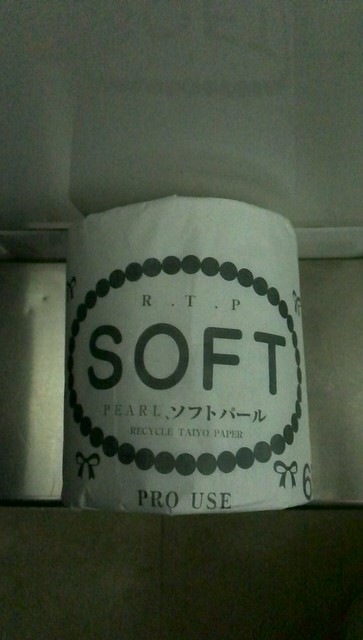
Anyway, I was in need of a fresh roll the other day when I noticed the packaging. It says:
× R.T.P Soft Pearl, Recycle Toilet Paper, Pro Use
R.T.P. Soft Pearl, Recycled Toilet Paper, Industrial 
There are several mistakes here, but one of them is pretty funny, I thought. That's the "pro use" part. It sounds like the toilet paper is only for people who are professionals at using toilet paper.

"Yes, sir, I am a butt-wiping professional with 37 years of experience!"
  • wipe someone's bottom with a piece of paper(人)のお尻を紙切れで拭く
  • butt〈米話〉けつ、しり◆【同】buttocks (definition from Eijiro on the Web)
It seems unnatural to me, and at least I took it wrong the first time I read it. I think the more common expression is "professional use", which often means "for professional use only". That makes it sound like this toilet paper is dangerous.

"No, wait! Don't wipe your butt with that toilet paper! It's for professionals only. You might hurt yourself!"

"Industrial" is often used for things that are used in industrial or commercial environments. On top of that, it's an adjective, so it's easier to use in front of a noun.

The other thing that was funny was their imperative statement: "Recycle Toilet Paper". It sounds like they want me to recycle my toilet paper! Don't you think that's gross?
  • imperative statement 命令ステートメント (definition from Eijiro on the Web)
  • gross 気持ち悪い、嫌な、ゾッとする、吐き気を催すような、いまいましい、ムカムカさせる、むかつく (definition from Eijiro on the Web)
They mean the toilet paper itself is made from recycled paper, which is nice.

Also be sure to catch the subtle mistake about periods. The extra period is necessary because it's an acronym for "something-starting-with-r", "Taiyo", and "Paper".
  • acronym 頭字語 (definition from Eijiro on the Web)
We teach English to professionals and non-professionals both, but we don't have industrial toilet paper in the restroom. It's just stuff from the drug store down the street. Still, I hope you will join us for a lesson soon!

2013/08/20

羽田空港は英語の使い方に注意した方が良い。

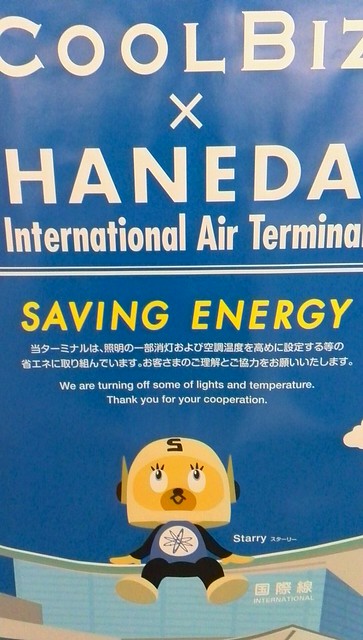
I was at Haneda Airport the other day, where I saw this sign. It says:

× We are turning off some of lights and temperature.
○ We are turning off some (of the) lights and setting the temperature higher.

The original sentence on the sign seems to use a compound object, meaning an object that has multiple parts which are connected by a conjunction. In this case, that's "some lights and temperature".

The problem is that you can't turn off the temperature. For temperature, you say:
  • raise the temperature 温度を上げる
  • lower the temperature 温度を下げる
You can say that you turn off an air conditioner, but that's not quite the same meaning.

The other mistake is the usage of "of". After "of", we often use a determiner.
  • determiner《文法》限定詞 (definition from Eijiro on the Web)
That means you need a word like "the", "those", "our". If you don't mean to specify, then you shouldn't use "of".

If Haneda wants to be an international airport, they need to get their English right. Some of the visitors to the airport might get a negative impression from these English mistakes. Some mistakes don't cause us to misunderstand, but all mistakes look bad. At any rate, mistakes are like noise, which you should avoid if you can.

I'm looking forward to being able to turn off the air conditioner, but I think that's several weeks away at least. Until then, I'm trying to lower the temperature in the classroom to something comfortable. I hope you will join us in a class sometime soon!

2013/07/24

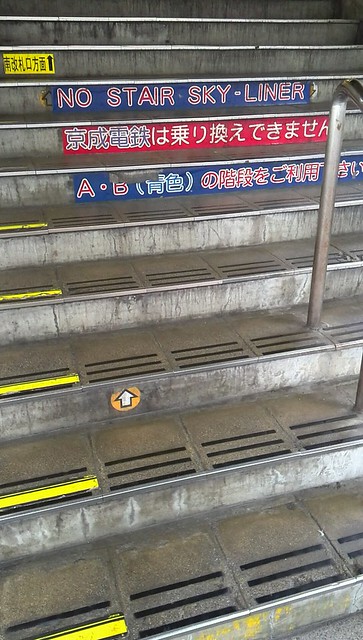
日暮里駅は英語の使い方に注意した方が良い。


I was at Nippori Station the other day, and when I was walking through the station, I noticed this sign on the steps of one staircase.

× No Stair Sky Liner
○ These stairs are not for the Sky Liner.
○ Not the stairs for the Sky Liner.
  • staircase【名】〔壁や手すりを含む〕階段 (definition from Eijiro on the Web)
Their phrase puts a noun next to another noun, in this case "stair" and "Sky Liner". When we use one noun in front of another noun, the first noun becomes an adjective to describe the second noun. In their mistake, it sounds like "stair" became an adjective to describe "Sky Liner", which makes no sense.

A correct way to use a noun in front of another noun is like this:
  • I always put my computer in a foam case when I'm going to take it somewhere. Some people call this foam case a laptop sleeve.
Notice their other mistake, which is using "stair" instead of "stairs". For example:

× I went up the stair.
○ I went up the stairs.

However, if you use "stairs" as an adjective, drop the "s". That's the rule for using a noun as an adjective: only use singular nouns, even if the meaning is plural.
Some days I run up the stairs from the ground floor to the floor my apartment is on. That's good exercise! The next time you are going up a staircase, think about using one noun as an adjective to describe another.

2013/07/16

「doubt」と「suspect」の違い

When I was in Sydney last month, I ate at this nice Taiwanese vegetarian restaurant:

http://www.motherchusvegetarian.com.au/

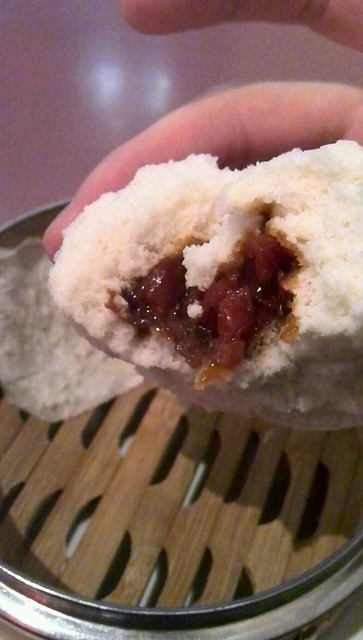
It's a chao shao bao, but instead of barbecued pork, it's a vegetarian version with textured soy protein. The spices they used were great, and it was steamed just right.

× You might doubt that it's meat, but it's not.
○ You might suspect that it's meat, but it's not.

Remember that "doubt" means "think not", but "suspect" means "think".
  • doubt ~を疑う◆否定的に (definition from Eijiro on the Web)
  • suspect ~を疑わしく思う、~を本当ではないと思う、~を信用しない (definition from Eijiro on the Web)
Both of them are usually used for bad things. For example, I wouldn't say:

× I suspect that the weather will comfortable tonight.
 I think that the weather will comfortable tonight.

The owner is Mother Chu. I got to talk with her some over the few meals that I ate there, which was a real pleasure. She is in her early 90s, so she could speak Japanese as well. We had a conversation in Chinese and Japanese about what it used to be like in Taiwan and in Sydney, where she has lived for 30 years (I think that is what she said). She even sang an old Japanese song for me.

You might doubt that a woman in her 90s could still work in a restaurant, but Mother Chu was sitting at a table and spoke with many of the customers, though I suspect that she probably doesn't bus tables or do much work in the kitchen. I recommend stopping by her restaurant if you are ever in Sydney. I doubt you will be disappointed.

2013/06/25

前置詞の使い方、「retire」の使い方


In a conversation today, somebody said:
× After you retire your company, where will you live?
○ After you retire from your company, where will you live?
It's really tricky to know when a preposition is necessary in English. My suggestion is to memorize sets, like the one above:
  • retire from [company]
It works the other way, too. Sometimes Japanese use a preposition when one isn't necessary.
× Have you asked to your friends where they want to retire?
○ Have you asked your friends where they want to retire?
I just visited Australia. It's a nice place, but I am not sure that I would retire there. Even if someone offered me a really cushy job there...
× I'd have to retire from my current job.
○ I'd have to quit my current job.
We usually only use "retire" when talking about someone who doesn't plan to work anymore, usually because of age.

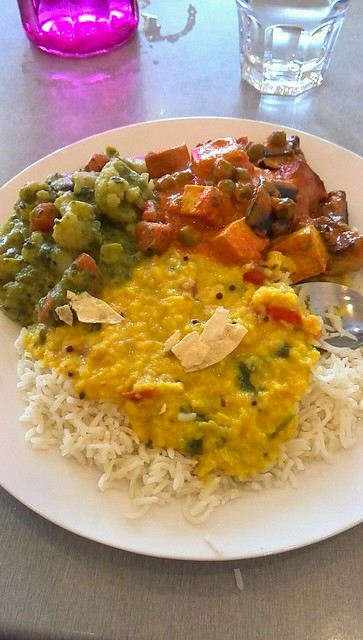
The problem is that I really like my job and life in Tokyo! However, I did eat some nice food like these curries in Sydney. When I really do retire, I hope I can eat good food like this every day.

2013/05/31

「already」の使い方, part 2


The other day I said I would tell you more about "already". Remember that "already" is an adverb. Dictionary.com gives two meanings:
  • by this or that time; previously; prior to or at some specified or implied time: When we came in, we found they had already arrived.
  • now; so soon; so early: Is it noon already?
Check the previous article and see which meaning of "already" is being used in each case.

I often use "already" when something is complete contrary to expectations.
  • contrary to ~に反して・Contrary to my expectation, I couldn't win the first prize. : 期待に反して、私は優勝を逃しました。(definition and example from Eijiro on the Web)
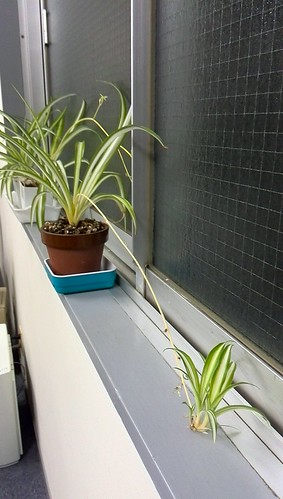
I've already told you about the photo above. It's the airplane plant with a shoot that is bowed because of the weight of that new plant growing at the end of it.

I'm not sure what to do about the spider plant ("spider plant" is another name for "airplane plant"). It is growing so strongly that I'm running out of space. It's roots have already started coming out of the bottom of the pot!

2013/05/29

Spring is over already? 「already」の使い方, part 1


I can't believe spring is over already. It seems like it was winter just a few days ago. I suppose that technically spring isn't over until the summer solstice, and that is just under one month away.
  • summer solstice《the ~》夏至 (definition from Eijiro on the Web)
However, it feels like spring is over. I'm already wearing shorts almost every day.

You can tell that I am behind because there haven't been any posts since April 9. I feel I just blinked my eyes, yet seven weeks have already passed.

I took this picture a few weeks ago, but that new plant at the end of the shoot is already too heavy for the shoot, so it's bowed down towards the floor now.
  • shoot《植物》〔種子から発芽した〕、芽《植物》若枝、新芽 (definition from Eijiro on the Web)
  • bowed【形】弓(bow)のように曲がった、頭を下げた (definition from Eijiro on the Web)
More about the grammar of "already" in the next post.

2013/04/09

Tokyo Milk Cheese Factoryは英語の使い方に注意した方が良い。


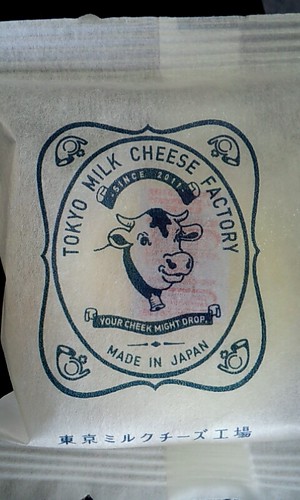
This was a really delicious cake, something like steamed bread filled with a very thick custard. It might be a bit sweet for Japanese tastes, but for my American tongue it was great!

The funny thing, though, is the slogan under the picture:
× Your cheek might drop. ← wrong grammar 
× Your cheeks might drop. ← right grammar, wrong meaning
  • cheeks 面, 頬 (definition from Weblio)
According to my kind students, this is a direct translation from Japanese. First, the grammar point. You have two cheeks, and in this case, we should probably refer to both by using the plural form.

In English, we don't say it this way, though. We associate cheeks rising with smiles. If you tell me that someone's cheeks dropped, I guess that they stopped smiling. Usually it means their mood has become serious and the fun has ended. That's exactly opposite of what this cake will do to you, though.

We do say "your jaw will drop". That means your mouth hangs open as a result of a surprise. If your jaw drops while you are eating, though, you are going to make a mess! Besides, who wants to see what's in your mouth?
  • make someone's jaw drop〔驚嘆すべき事態などが〕(人)の口をあんぐり開けさせる、〔主語の事態に驚いて〕(人)は口をあんぐり開ける (definition from Eijiro on the Web)
They probably mean something like "your mouth will be in heaven", but that idiom might be overused (cliche).
  • cliche【名】〈フランス語〉〔使い古された〕決まり文句、定型表現◆つづりのeにはアクサンテギュが付く。 (definition from Eijiro on the Web)
It's going to take a real copywriter to come up with a good one, something like... no, everything I think of sounds like sexual innuendo. If I said those, your jaws might drop. Anyway, I hope Tokyo Milk Cheese Factory can do something about their slogan.
  • sexual innuendo 性的なほのめかし (definition from Eijiro on the Web)

フォロワー