2012/04/11

このレストランは英語の使い方に注意した方が良い。


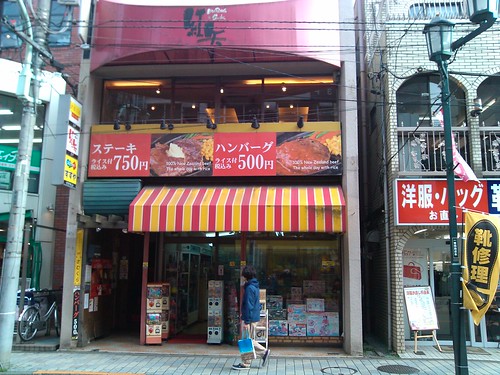
I was in Kunitachi the other day and noticed this sign. It says:
× 100% New Zealand Beef, The whole day with rice.
○ serving 100% New Zealand beef with rice, all day
The main problem here is the word order.

  • word order 語順 (definition from Eijiro)

If you follow a noun with a prepositional phrase, it sometimes can sound like the prepositional phrase is describing the noun.

  • prepositional phrase 前置詞句 (definition from Eijiro)

This restaurant's phrase is hard to understand. It sounds like there are days with rice and days without rice, which would mean:

  • On days with rice, we serve 100 percent New Zealand beef all day.

That means they aren't serving the New Zealand beef on the days without rice. I'm pretty sure that isn't what they mean, but I didn't go in to check. I'm a vegetarian, so my interest in the restaurant doesn't go beyond the sign.

  • one's interest doesn't go beyond [noun] ~にしか興味を示さない

The other thing to remember is that after the verb, a common order is to put time last, after manner and place, like:

  • I'm in my classroom on the sixth floor right now. <- place = sixth floor; time = now

If I look out the window, I can see the water on the street and umbrellas in people's hands. The smartphone on my desk is kind of dirty. The fingerprints on the screen are mine, and I don't really know how to avoid smudging the screen like that. My stomach is growling in my belly on this typical Wednesday evening, so I'd better finish up this post and go eat some dinner.

2012/04/04

「rent, lend, borrow」の違い


The other day somebody came to class and realized she had forgotten her pen. She asked me:
× Can you borrow a pen?
○ Can I borrow a pen? Can you lend me a pen?
  • borrow 借りる
  • lend 貸す
"Borrow" and "lend" have a direction. The subject of "borrow" is receiving something. The subject of "lend" is giving something.

I was talking about a book with someone. It sounded like an interesting book. The person I was talking to sensed my interest in the book and said:
× I can rent it to you.
○ I can lend it to you.
  • rent 賃借[賃貸]する
If you rent something, it means you are a business person. You are earning money by allowing someone to use something that you own. I know that the pronunciation of these two is a little similar. You have to be really careful about "r" and "l".

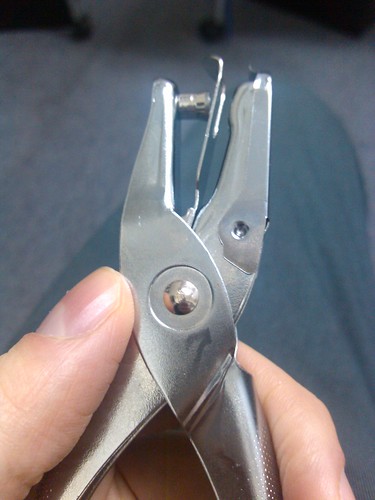
One student has been collecting notes from class in her notebook. She always punches holes in her paper using the rings in her binder. I had been meaning to get a hole punch, but every time I go to the 100 yen shop or office supply store, I always seem to forget what I wanted to buy.
  • hole punch 穴あけ器 (definition from Eijiro on the Web)
This week, though, my memory was working well, and I remembered to get the hole punch.

If you ever visit me at my classroom, I'd be happy to lend you a pen or my hole punch. I'll even lend you a sympathetic ear.
  • lend a sympathetic ear 親身になって耳を貸す、同情して話を聞く、じっくり話を聞く (definition from Eijiro on the Web)

2012/03/28

成田空港は英語の使い方に注意した方が良い。「the」の使い方


I haven't posted in a while because I took a trip to the US. It was interesting to visit, especially because it had been a while.
It's been a while since
~して以来ずいぶん日がたつ。/久しぶりに~する。/~するなんて久しぶりだ。/ずいぶん長い間~していなかった。/最近[ここしばらく]~していない。(definition from Eijiro on the Web)

On the way back, I was waiting for the Narita Express when I noticed this sign.
  • This is the terminal 1 of Narita Airport.
  • This is terminal 1 of Narita Airport.
  • This is Terminal 1 of Narita Airport. <- treating it as a proper noun might be best

Some people think "the" is tricky, but actually there are not so many special cases, and only a few rules. One of the rules is this:

Don't use "the" in the case of a name with a title.

You don't say the Mr. Bell (usually), nor do you say the Queen Elizabeth; you say Mr. Bell or Queen Elizabeth. In the same way, we don't say the Mount Fuji; it's Mount Fuji.

Numbered buildings, platforms, and terminals are the same.
  • The train you want is at platform 3.
  • His office is in building 5. <- one building in a complex of buildings

If the building my classroom is in were a giant space station or complex of some sort, I could say that my classroom is on level 6. However, our building is a rather small one between Shin-nihonbashi Station, Mitsukoshi-mae Station, and Kanda Station. As a result, I can just say that our classroom is on the sixth floor. Make an appointment with me and come by for a visit!

2012/03/07

アメトーークは英語の使い方に注意した方が良い。


I was watching this Japanese comedy program called アメトーーク last Thursday. I think it's a pretty funny show. I have to give them some credit for improving my Japanese listening ability. That's because I watch it regularly, and now their quickly moving Japanese is getting easier for me to understand. I still don't catch 100 percent of what they say, but things like this take time.
  • give someone credit (人)を正しく評価してやる、(人)に掛け売りをする、(人)に信用で貸す (definition from Eijiro on the Web)
Anyway, they had given gifts to their guests last week, and when they showed the gift (a hip bag) on the screen, I got excited! That's because the gift had this English printed on it:
× I am Japanese traveling comedian.
○ I am a traveling Japanese comedian.
  • comedian 【名】コメディアン、お笑い芸能人{げいのうじん}(definition from Eijiro on the Web)
There are two problems here. The first is the article "a". "Comedian" is a countable noun, so we need a number or an article. Since they are talking about the kind of thing ("comedian" versus "teacher"), we should choose "a". Like this:
  • Ken Kobayashi is a comedian. <- I explain his type.
  • He was not one of the comedians on アメトーーク last week. <- I am pointing out the comedians on the show, which you know about since I was talking about it.
The second problem is the order of the adjectives. The adjective that is more essential to the character of the noun goes closer to the noun. The comedian is definitely Japanese, and changing that is difficult. As a result, "Japanese" goes closer to comedian than "traveling". If the comedian stops traveling for a year, he will still be Japanese.

This problem might be tough to understand, so I think I'll talk more about it in my next post. Until then!

2012/02/15

「どうやって○○」は英語で何?「how」の使い方


Some people in class the other day were asking about how to use "how". Here's the advice I gave them. "How" has at least three meanings when used in a question.
  • How do I do it? "how" = "way", どうやって..., answer with a method, as in "Do it this way."
  • How does he feel? "how" = どのよう..., answer with an adjective, as in "It feels great!"
  • How cold was it? "how" = どのくらい...[how + adj/adv]... answer with an adverb, as in "It was very cold."
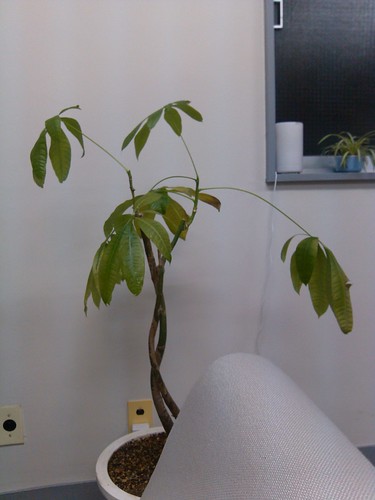
The money tree is doing really badly. It was so dense back in November, but not now. How do I prevent it from dying?
  • prevent ~ from 〔主語は〕~が…するのを防ぐ[邪魔{じゃま}する]、~に…させない、~が…できないようにする、~が…にならないように予防{よぼう}する、〔主語が原因{げんいん}で〕~は…できない (definition from Eijiro on the Web)
There were five trunks. Three of them died. There are two left, and those two don't look so good. How bad do you think it is?
  • trunk〔木の〕幹 (definition from Eijiro on the Web)
I wonder how the money tree feels. Maybe it's just feeling too cold. We tried changing the pot, but that didn't seem to help. How long can it survive? I hope it can make it until spring. Maybe it will start growing better once the weather is warmer.

2012/02/14

Natural Houseは英語の使い方に注意した方が良い。


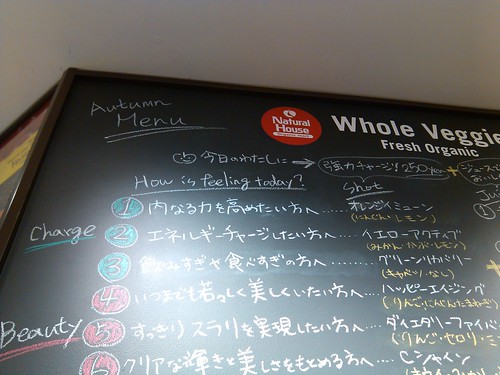
I was in Natural House on the weekend. While checking out, I noticed a sign they had over the area where they were selling fresh juice. It asks us:
× How is feeling today?
○ How are you feeling today? How do you feel today?
  • check out〔レジ係が〕合計{ごうけい}を計算{けいさん}する、精算{せいさん}をする (definition from Eijiro on the Web) 
The important grammar mistake here is the missing "you". In Japanese, it's often possible to omit the subject, but in English you can't do that in most cases.

The really funny thing is the top left corner. It says "autumn menu". We know that autumn was over a long time ago! I guess that probably they have updated the menu but simply overlooked the English in the corner.
  • overlook 見落{みお}とす(definition from Eijiro on the Web)
My advice to any company using English in their signage is that you need to pay attention to exactly what it is you are expressing!
  • signage【名】〔指示・警告の〕文字、記号{きごう}、信号{しんごう}、表記{ひょうき}、看板{かんばん}、標識{ひょうしき}(definition from Eijiro on the Web)
A grammar mistake, while embarrassing, might not interfere too much with the meaning.
  • interfere 【自動】邪魔{じゃま}をする、妨げる、遅らせる(definition from Eijiro on the Web)
On the other hand, wrong vocabulary can result in a completely wrong meaning, like in this case. That's when communication fails.

I hope that Natural House will join the rest of us. Spring will be here soon!

2012/02/08

過去完了形の使い方


In class the other day someone was asking about past perfect tense.
  • past perfect 《文法》過去完了(形){かこ かんりょう(けい)}(definition from Eijiro on the Web)
My summary of how to use past perfect was this:
  1. two past events
  2. A happens before B
  3. A is important for B
You should use past perfect to describe A.

For example:
  • I was interested in ways to cook with Japanese mountain yam other than grinding it and putting it on soba. <- A  (Japanese mountain yam 山芋 )
  • I experimented with stir-frying it. <- B, the reason for this was A
  • Since I had been interested in ways to cook Japanese mountain yam other than grinding it and putting it on soba, I experimented with stir-frying it.
The sauce was made with miso, soy sauce, and sesame oil. It turned out delicious!

For more about past perfect tense, check these posts:

http://upgradeenglish.blogspot.com/2009/06/when-do-i-use-them.html
http://upgradeenglish.blogspot.com/2009/06/when-do-i-use-them-part-2.html
http://upgradeenglish.blogspot.com/2009/06/when-do-i-use-them-part-3.html
http://upgradeenglish.blogspot.com/2009/06/when-do-i-use-them-part-4.html

If you have any tips for cooking Japanese mountain yam, I'd like to hear them. Send me a comment or mail!

2012/02/03

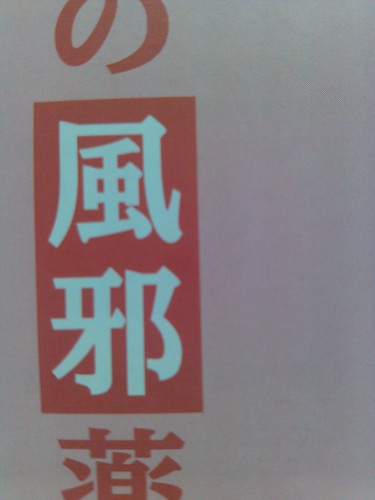
風邪の話


Sorry for the long silence on the blog since the last post. Last week was really busy, and I think I'll write about it in my next post. This week I had the worst cold I've had in a long time.

I started to come down with this cold on Sunday. The symptoms were typical. By Sunday night, I was suffering from chills and body aches.

  • come down with a cold 風邪{かぜ}で倒れる[ダウンする](definition from Eijiro on the Web)
  • symptom 症状
  • chills 悪寒 (definition from Eijiro on the Web)
  • body aches 体の痛み (definition from Eijiro on the Web)

When I woke up on Monday morning, I felt like death warmed up.

  • feel like death warmed up ひどく疲れている、ひどく具合が悪い (definition from Eijiro on the Web)

Still, somehow by late Monday evening I had recovered a lot, I thought, so Tuesday I went ahead with teaching.

  • go ahead with 〔計画{けいかく}・仕事{しごと}などを〕進める、推進{すいしん}する、強行{きょうこう}する (definition from Eijiro on the Web)

That might have been a mistake. I got a runny nose, and I couldn't stop sneezing. When I got home, I found out that I was running a fever. I started coughing. I really hope I didn't pass my cold to my student on Tuesday evening.


  • runny nose 鼻水の垂れている鼻
  • sneeze くしゃみをする
  • run a fever 熱を出す
  • cough 咳をする
  • (definitions from Eijiro on the Web)


Wednesday I finally went to the doctor to get some medicine, which seemed to help with my fever. I was still coughing, though, and the runny nose turned to a stuffed-up nose. The staff at the clinic told me they had seen many patients with colds. This is one trend that I don't want to take part in, though.

  • have a stuffed-up nose 鼻が詰まっている (definition from Eijiro on the Web)
  • take part in ~に参加{さんか}[出場{しゅつじょう}]する (definition from Eijiro on the Web)

Finally today I feel back to about 75% of my usual self, with a normal body temperature and no runny nose.

  • body temperature 体温 (definition from Eijiro on the Web)

If you are one of those people suffering from a cold, I hope you get well soon!

  • Get well soon. 早く元気になってくださいね。/お大事に。◆【場面】見舞いなどで病人の早期回復を願う。(definition from Eijiro on the Web)

フォロワー