2013/05/31

「already」の使い方, part 2


The other day I said I would tell you more about "already". Remember that "already" is an adverb. Dictionary.com gives two meanings:
  • by this or that time; previously; prior to or at some specified or implied time: When we came in, we found they had already arrived.
  • now; so soon; so early: Is it noon already?
Check the previous article and see which meaning of "already" is being used in each case.

I often use "already" when something is complete contrary to expectations.
  • contrary to ~に反して・Contrary to my expectation, I couldn't win the first prize. : 期待に反して、私は優勝を逃しました。(definition and example from Eijiro on the Web)
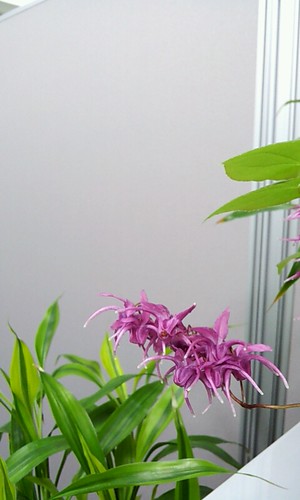
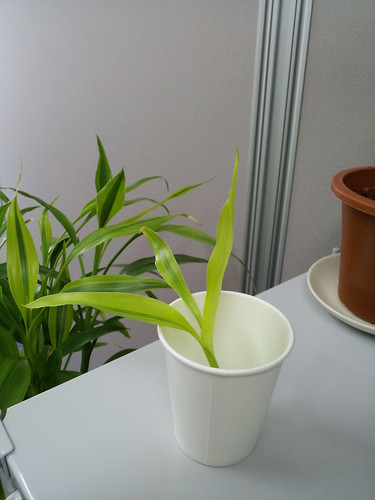
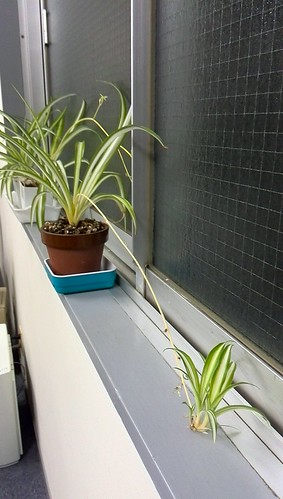
I've already told you about the photo above. It's the airplane plant with a shoot that is bowed because of the weight of that new plant growing at the end of it.

I'm not sure what to do about the spider plant ("spider plant" is another name for "airplane plant"). It is growing so strongly that I'm running out of space. It's roots have already started coming out of the bottom of the pot!

2013/05/29

Spring is over already? 「already」の使い方, part 1


I can't believe spring is over already. It seems like it was winter just a few days ago. I suppose that technically spring isn't over until the summer solstice, and that is just under one month away.
  • summer solstice《the ~》夏至 (definition from Eijiro on the Web)
However, it feels like spring is over. I'm already wearing shorts almost every day.

You can tell that I am behind because there haven't been any posts since April 9. I feel I just blinked my eyes, yet seven weeks have already passed.

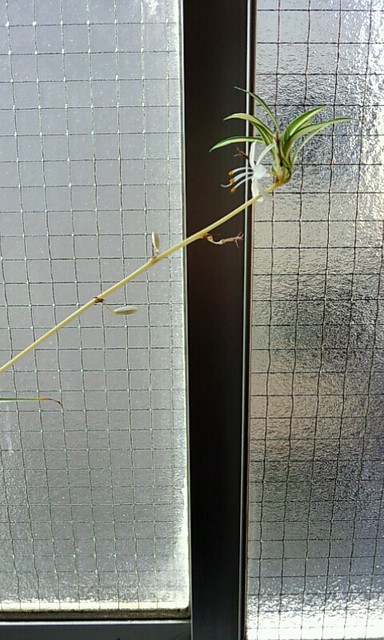
I took this picture a few weeks ago, but that new plant at the end of the shoot is already too heavy for the shoot, so it's bowed down towards the floor now.
  • shoot《植物》〔種子から発芽した〕、芽《植物》若枝、新芽 (definition from Eijiro on the Web)
  • bowed【形】弓(bow)のように曲がった、頭を下げた (definition from Eijiro on the Web)
More about the grammar of "already" in the next post.

2013/04/09

Tokyo Milk Cheese Factoryは英語の使い方に注意した方が良い。


This was a really delicious cake, something like steamed bread filled with a very thick custard. It might be a bit sweet for Japanese tastes, but for my American tongue it was great!

The funny thing, though, is the slogan under the picture:
× Your cheek might drop. ← wrong grammar 
× Your cheeks might drop. ← right grammar, wrong meaning
  • cheeks 面, 頬 (definition from Weblio)
According to my kind students, this is a direct translation from Japanese. First, the grammar point. You have two cheeks, and in this case, we should probably refer to both by using the plural form.

In English, we don't say it this way, though. We associate cheeks rising with smiles. If you tell me that someone's cheeks dropped, I guess that they stopped smiling. Usually it means their mood has become serious and the fun has ended. That's exactly opposite of what this cake will do to you, though.

We do say "your jaw will drop". That means your mouth hangs open as a result of a surprise. If your jaw drops while you are eating, though, you are going to make a mess! Besides, who wants to see what's in your mouth?
  • make someone's jaw drop〔驚嘆すべき事態などが〕(人)の口をあんぐり開けさせる、〔主語の事態に驚いて〕(人)は口をあんぐり開ける (definition from Eijiro on the Web)
They probably mean something like "your mouth will be in heaven", but that idiom might be overused (cliche).
  • cliche【名】〈フランス語〉〔使い古された〕決まり文句、定型表現◆つづりのeにはアクサンテギュが付く。 (definition from Eijiro on the Web)
It's going to take a real copywriter to come up with a good one, something like... no, everything I think of sounds like sexual innuendo. If I said those, your jaws might drop. Anyway, I hope Tokyo Milk Cheese Factory can do something about their slogan.
  • sexual innuendo 性的なほのめかし (definition from Eijiro on the Web)

2013/04/02

「人が亡くなる」を英語でどう言う?


I have to apologize for not posting in the past two weeks. My grandmother became very ill, so I returned to America to see her. She passed away while I was there.
  • pass away - 亡くなる、死ぬ、死亡する、死去する、他界する、逝去する、逝く、この世を去る、永眠する、帰らぬ人となる、去る、終わる、廃れる、なくなる、自然に帰る (definition from Eijiro on the Web)
Once I got back to Japan, I had really bad jet lag.
  • jet lag ジェットラグ、時差ぼけ (definition from Eijiro on the Web)
I couldn't stay awake past midnight, even though that's my habit. Even yesterday, I was worthless by 11 pm.

Now I'm behind on my posts, so I'll try to catch up.

There are a lot of other ways to say it, depending on the situation, but "pass away" is definitely the most useful one for you.

Still, be careful about the correct use of the words related to the verb "die".
  • die (v) 死ぬ
  • dead (adj) 死んでいる
  • death (n) 死
I often hear mistakes like:
× He dead in the war.
○ He died in the war.
I got these nice flowers from someone the other day. I'll enjoy them until they are close to death, but that's one of the problems with cut flowers: they always die. Anyway, like the cherry blossoms nearing the end now, maybe their transience makes them more beautiful.
  • transience of nature 移ろいやすさ (definition from Eijiro on the Web)
  • transience【名】一時的であること、はかなさ、無常 (definition from Eijiro on the Web)

2013/03/13

「somebody」と「some people」の違い

Somebody (one person) asked me the other day what the difference is between "somebody" and "some people".  The difference is simple: "somebody" is singular, but "some people" is plural.
  • singular 単数形、単数 (definition from Eijiro on the Web)
  • plural 複数形、複数 (definition from Eijiro on the Web)
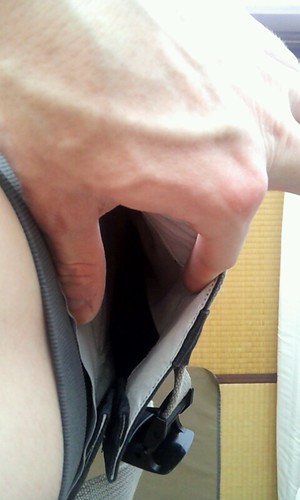
I had to throw out some pants recently because they had become too big in the waist. They were falling off. Since moving from Taiwan over seven years ago, I've been riding a bicycle every day. I also haven't had access to the great vegetarian restaurants that they have in Taiwan, so I've been eating less. That means I've lost weight and fat over the years: 10 kg!

Some people might have thought I was already thin and be concerned, but actually I think I'm much healthier now. Somebody did tell me that they thought my face looked like a knife, though.

Some people might use a belt to make up the difference in the waist, but I didn't really want to do that. I wondered if somebody might want the pants (only one person could take the pair of pants), but the truth is those pants were 15 years old. I figured nobody would want them.
  • make up the difference 差(額)を補う、必要な金額の残りを出す、差を穴埋めする (definition from Eijiro on the Web)
Some people might wonder why I'm showing you a picture that is basically a photo down my pants. I think some people can understand the story better with a photo!

I know some people reading this blog might have questions, like the "somebody" who asked me this question. Please send your questions to me!

2013/03/05

「almost」の使い方

It was funny the other day. We were talking about sports in class. Of course, the World Baseball Classic is going on right now, and a lot of people are crazy about it. Somebody told me:
× Almost people like baseball.
○ Almost all people like baseball.
This was so funny, because the incorrect sentence means:
  • Those who are almost people like baseball. In other words, those who like baseball are not human. 野球が好きな人々は、ギリギリ人間しか居ない。← maybe somebody can fix my bad Japanese sentence. If you can, please let me know!
The problem is that "almost" is typically followed by an adjective, since it means "very nearly" or "all but" (according to the Random House Dictionary).

I talked about this common mistake back in 2009. You might like to reread that old blog post, too:
http://upgradeenglish.blogspot.jp/2009/04/almost-all-of-these-are-wrong.html
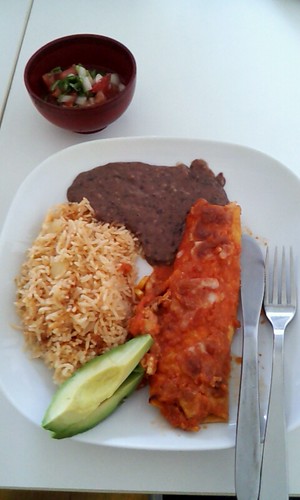
I cooked these enchiladas back in January. I was thinking about food in Texas, and this is one the dishes that I used to eat a lot when I lived there.
  • enchilada《メキシコ料理》エンチラーダ◆肉を詰めたトウモロコシパン。トマトチリソースで。(definition from Eijiro on the Web)
There are Tex-Mex restaurants all over the state. I suppose almost all, if not all, towns in Texas have at least one Tex-Mex restaurant. I often ate a plate meal just like this quite often. The difference is that back in those days, I ate chicken enchiladas. Since I'm a vegetarian now, I had to think of an alternative. These enchiladas are filled with strips of fried tofu instead. It turned out pretty good. I'll probably cook them again the next time I think of the food in Texas.

I think I can answer almost all of your questions about English. If you have some, let me know. Even better, think about coming to a class!

2013/02/25

「need」の使い方, part 3


I've got to be honest with you all. Sometimes we do use "need" with an object as the subject:
  1. That device needs a new battery.
  2. = The battery in that device needs replacing.
  3. = I (or someone else) need(s) to replace the battery in that device.
  4. = The battery in that device needs to be replaced.
This is where it gets a bit tricky, which is why I recommended that you use pattern 3 rather than the other two. I want to give you a safe pattern that you can use with less fear of making mistakes. You need reliable patterns so that you can speak with confidence. If you use pattern 3, you are less likely to make a strange sentence. Please use that one!
  • reliable【形】 信頼[信用]できる、信頼性のある、頼り[当て]になる[できる]、頼りがいのある (definition from Eijiro on the Web)
Pattern 4 is also a good choice. Notice that the passive is used in the infinitive, not with "need".
× The battery in that device is needed to replace.
One more passive way to say it is:
  • Replacement of the battery in that device is needed. <- and="" formal="" i="" it...="" li="" never="" say="" sounds="" this="" would="">
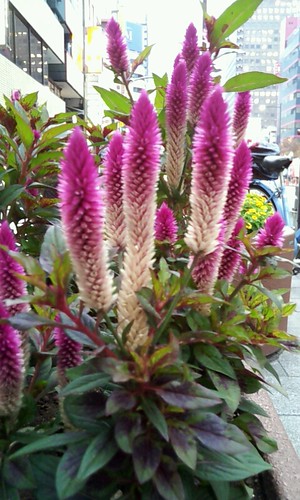
I saw these flowers growing in a planter outside my building the other day. I think Tokyo needs more flowers like this. In other words, flowers like these are needed by people living in Tokyo. Such flowers need to be planted everywhere!

If your English needs work, please get in touch!

2013/02/23

「need」の使い方, part 2


I was writing about "need" the other day. There are other ways to use "need". For example:
  1. This cutting needs potting. 
  2. = This cutting needs to be put into a pot.
  3. = I need to put this cutting into a pot.
The pattern is:
  • [noun] needs [verb+ing]
To be honest, I never use this pattern. It feels like something one of my grandmothers used to say. I'm more likely to use one of the other two patterns. Still, you should know about this pattern.

You couldn't use this pattern to say the sentence from the other day, though:
× Living in Tokyo doesn't need driving a car.
Getting back to my photo, the problem was that one stalk of our lucky bamboo was withering.
  • wither【自動】〔植物が〕しぼむ、しおれる、枯れる (definition from Eijiro on the Web)
The top was still green, though. I thought it needed trimming, so I cut it off and trimmed the withered part off of the stalk, too. I put the cutting in a cup of water with fertilizer, but today I should probably put it in some soil. I need to do it soon so that it has the best chance for survival.

If your English needs improving, please let me know!

フォロワー