ラベル 慣用語 の投稿を表示しています。 すべての投稿を表示

2009/09/16

浜離宮恩賜庭園の英語の使い方は比較的良い。

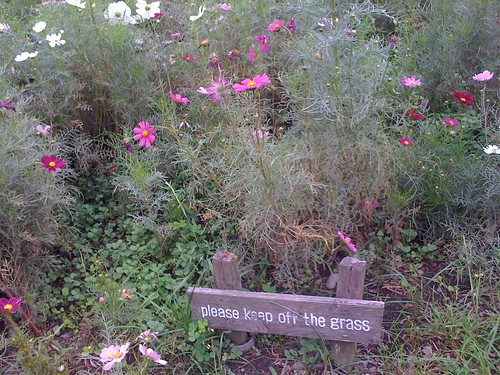
Nice flowers, aren't they? I saw these flowers at Hamarikyu Gardens (浜離宮恩賜庭園) near Shinbashi Station. I often ride by there on my bicycle, and the other day I went inside to take a look around.
  • take a look around ~を見物しに行く、見回す (definition from Eijiro on the Web)
It's a really relaxing place, and there are several fields of flowers. However, on the edge of the field, I found this sign:
× please keep off the grass
KEEP OFF THE GRASS 芝生立ち入り禁止 (definition from Eijiro on the Web)
The grammar is almost right. Here's how it should have been written:
○ Please keep off the grass.
Don't forget that you should always capitalize the first letter of the first word in a complete sentence.
  • capitalize ~を大文字{おおもじ}で書く (definition from Eijiro on the Web)
Also, don't forget periods at the end of your sentences.

Since I'm picky, what bothers me more is that this isn't grass. It's a field of flowers! It would have been OK if they said:
Please keep out of the flowers.
Please stay out of the flowerbed.
flowerbed - 花壇
Despite their English mistakes on their signage, they did have a well-done English brochure, with only one mistake in it. Nice job! I'm worried about the Japanese headline of this post, though. I had better study Japanese more. I'll post more pictures of the park another time.

2009/09/15

「くたばる」は英語で何?

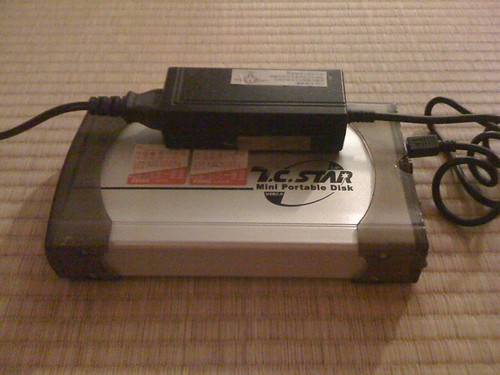
I bought this hard drive about five years ago in Taiwan. Recently, I bought a new hard drive to back up a lot of my data.
  • back up data - コンピューターのデータをバックアップする
When I was doing my backups, I wanted to move the things on this drive to the new drive. However, when I plugged it in, the light on the front just flashed green and red. I tried everything, but no matter what, I couldn't access the data inside. It had died.

It had kicked the bucket.
  • くたばる (v5r,vi) (1) (col) to kick the bucket; to drop dead; to die; (2) to be pooped; to be exhausted; (P);
It had croaked.
  • croak - くたばる、死ぬ、落第する
It had bitten the dust.
  • bite the dust - 戦いで倒れて死ぬ、戦死する
All of these phrases are slang; don't use them in a really serious situation.

I can't remember what was on the drive. I hope it wasn't important. A friend of mine says that no high-tech gear can survive more than five years. Maybe he's right. Remember to back up your data!

2009/09/11

「コストパ」は英語で何?

Here are the answers to yesterday's question:
These days I try to cook:
× a) as possible as I can
× b) as can as much
○ c) as much as possible
× d) possibly as much
○ e) as much as I can.
Even though I try to cook as much as possible, lunch is a meal I can rarely cook.

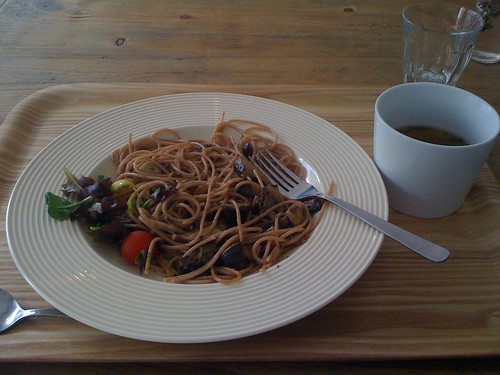
Today, I tried a relatively new vegetarian restaurant in Higashi-Nihonbashi. The interior was pleasant, and I particularly liked the natural lighting.

I had a mushroom pasta with a tiny salad and a cup of vegetable soup. The meal cost ¥1000. The flavor was not so bad, but to be honest, the pasta was a bit saltier than I like, and the soup was a bit more watery than what I make at home. The salad was also much too small.
  • コストパ、コスト・パフォーマンス cost performance // price vs performance (definition from Eijiro on the Web)
I'm not sure I've ever heard a native speaker use this in a conversation, especially about food. We're more likely to say something like:
  • It wasn't a very good value.
  • It wasn't worth it.
  • I didn't get my money's worth.
I'll try it again another time. If it's better, I'll give you the details on how to visit yourself.

2009/09/10

出来るだけ

In this photo, you can see the dinner I made last night. I talked about it in my post yesterday:
http://upgradeenglish.blogspot.com/2009/09/lotlots.html
The bowl in front is the sesame sauce noodles. The small bowl on the right in the back is filled with cucumber pickles. The plate on the left is stir-fried Chinese cabbage, also known as bok choi, with fake duck meat.
  • 青梗菜 (ちんげんさい) (n) qinggengcai (spinach-like green vegetable originating in China); pak choi; bok choi; bok choy;
Cooking at home saves money, and the food is generally better for my health. It's also fun!

Which of these is right?
These days I try to cook:
a) as possible as I can, b) as can as much, c) as much as possible, d) possibly as much, e) as much as I can.
Check back for the answer!

2009/07/11

Enjoying the sunset

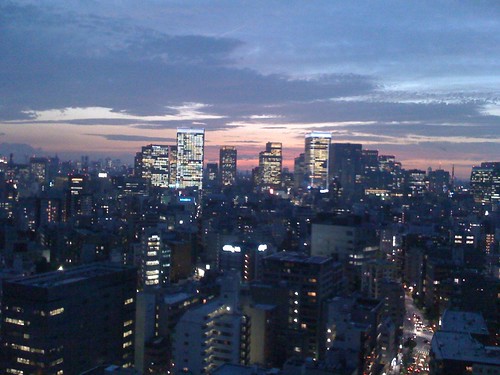
I got home a bit earlier than usual last night. When I looked out the window, I saw this beautiful sunset. By the way, why does Japanese have so many words for "sunset"? Which one should I use?
  • sunset
  1. 夕日{ゆうひ}、入り日
  2. 夕焼け(空)
  3. 夕方{ゆうがた}、日暮れ{ひぐれ}、たそがれ
  4. 末期{まっき}、晩年{ばんねん}
  5. 斜陽{しゃよう}、衰退
At street level, I'm rarely aware of the setting sun, and I usually get home long after the sun has gone down.
  • at street level 1階[地上{ちじょう}]部分{ぶぶん}では
  • long after ~のずっと後に
  • sun goes down 日が沈む[傾く]
As the sun set, I thought the colors were particularly nice, so I wanted to share it with all of you. While I don't care for the summer weather, I should take advantage of the extra daylight.
  • sun sets 日が沈む
  • I don't care for it. それは嫌です。/それはしません。
  • take advantage of an opportunity
    機[チャンス]に乗じる、チャンスを利用{りよう}する
We're past the summer solstice, so the sun is setting later every day. Enjoy it while it lasts.
  • summer solstice 《the ~》夏至
  • Enjoy it while it lasts. 今のうちに楽しもう。◆じきに終わるイベントなどについて

2009/05/28

Yesterday there was a difficult sentence, and some people had the confusion to match.

There was something tricky in an article we were talking about earlier this week. Some of you have read this article about blood types:
http://search.japantimes.co.jp/cgi-bin/ek20090311a1.html
In the eighth paragraph, there's this line:
"Type O's, on the other hand, are acknowledged as generous, passionate lovers with hearts of gold and wallets to match."
Many students were puzzled about this line. There are two things happening here. The first is an idiom:
__(subject)__ has __(n)__ and the __(n)__ to match
It means that the second and third nouns are often found together, and the subject of the sentence has both. Here's an example:
The gray-haired college professor has the body of a college athlete and the energy to match. この白髪の大学教授には、大学の運動選手並みの肉体とそれに見合う活力があります。(definition from 英辞郎 on the web)
The students said that example wasn't so easy to understand, so here are two others.
He has red hair and the temper to match. <- It's a common belief that people with red hair have short tempers. This person, like the stereotype, has both red hair and a short temper.
  • short temper 短気{たんき}、怒りっぽい性質
He has an Ivy League education and the attitude to match. <- It's a common belief that people who went to an Ivy League university can be stuck up. This person went to such a school and is also stuck up.
  • stuck up《be ~》つんとする、威張っている、うぬぼれている、思い上がっている
The second thing going on in that example was a play on words.
  • play on words 《a ~》言葉遊び{ことばあそび}、しゃれ、語呂合わせ{ごろあわせ}That joke has a funny play on words. : あのジョークには面白い語呂合わせが含まれている。(definition from 英辞郎 on the web)
"A heart of gold" means a kind character. "A wallet to match" sounds like "a wallet of gold", which means "a wallet full of gold." We can interpret that to mean "rich". You can see that "gold" in "a heart of gold" and "gold" in "a wallet of gold" have different meanings.

When we read the sentence from the article, we understand that type O people are often kind and rich.

Yesterday, the rain was terrible. I rode my bicycle from home to Tokyo Station first. Then I rode to Nihonbashi. After that, I went to Shiba Park, and then finally I went to Shinbashi. By the time I got home, my rain suit wasn't repelling the rain anymore, and I had soaked socks to match. Now I think I have to replace my rain suit. I had better do it soon, because rainy season is coming.

2009/05/25

This is one reason that I cut my own hair.

This morning I gave myself a haircut with the pair of clippers I have.
  • バリカン (n) barber's clippers; (from Edict)
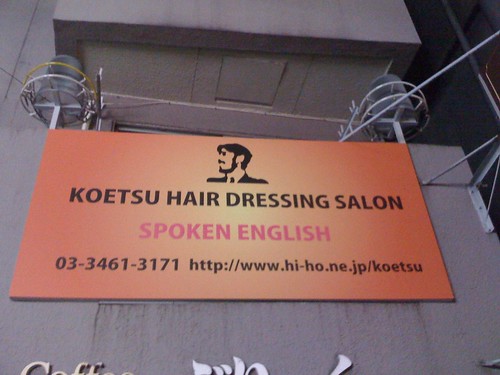
Since I just shave my head, it's easy, and I save money and time. However, there's another reason. Look at the photo.

Here's another case of someone with good intentions but bad execution.
  • genuinely good intentions 純粋な善意 (from 英辞郎 on the web)
  • bad execution 不出来 (from 英辞郎 on the web)
We can guess they intend to get English-speaking customers, so they have written:
× spoken English
I understand what they mean. Probably they want to say something like this:
○ English is spoken here.
○ We speak English, too!
○ Don't speak Japanese? Don't worry! We speak English!
This isn't a big mistake, I suppose. Check out the difference between spoken English and written English:
  • 口語英語 (n) spoken English; (from Edict)
  • written English 書き言葉の英語、文語英語 (from 英辞郎 on the web)
Remember the sign about beer from the other day? I wouldn't worry so much if there's an article mistake when I'm trying to order beer. A communication error in this case won't be so serious.

However, if I want to keep it long on top, and the stylist takes a lot off the top, we're going to have a problem.
  • keep it long on top = allow the hair on the top of one's head to remain long; 上の方の髪は長い方がいい。
  • take a lot off the top = cut the hair on the top of one's head very short; 上の髪を短く切って下さい。
So, if I need to speak English with my barber, the barber's English really has to be OK. Maybe they really can speak English here, but they should have gotten one of their clients who is a native English speaker to check the text for their sign before they made it.
  • 床屋 (n) barber; (P); (from Edict)
And as always, if you catch a mistake in any of the Japanese here (and I bet there are plenty of mistakes!), please let us know.

2009/05/04

I've been taking it easy today. Check out these idioms.


There are a lot of things that I should be doing, but instead I've been taking it easy.
  • take it easy - 気楽にいこうぜ (きらくにいこうぜ) (exp) ; (from Edict); リラックスする、気楽{きらく}にする[やる]、のんびりする、ゆっくりする、休む、肩の力をぬく、無理{むり}しない、悠長{ゆうちょう}に構える、あせらない、のんきに構える、のんきにやる、落ち着く、怒らない (from 英辞郎 on the web)
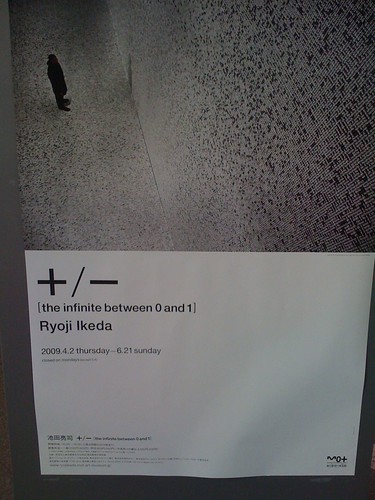
This afternoon I went to the Ryoji Ikeda (池田亮司) exhibition at the Museum of Contemporary Art Tokyo (東京都現代美術館). It was an audio/visual exhibition of both his sound art and visual art. Part of the exhibit was an excerpt of his Datamatics piece, which I saw last year in Ebisu. While the work is not quite cut to the bone, it is very minimal, with lots of black and white; the sounds are electronic. Some might feel it's just beeps and noise.
  • cut to the bone ぎりぎりまで値引きをする、ぎりぎりに切り詰める (from 英辞郎 on the web)
At any rate, I really enjoyed it. You might like to check it out.
  • at any rate - 何せ (なんせ) (adv) (uk) ; anyhow; (from Edict)
Always think of you all, I was on the lookout for mistakes in the English signage, but I couldn't find any. Good job, Museum of Contemporary Art!
  • being on the lookout - 看視 (かんし) (n,vs)
After the museum, I went to Kinshicho. Of course, there I couldn't avoid the mistakes even if I wanted to.
  • I couldn't forget her even if I wanted to.
    彼女のことは、忘れたくても忘れられない。(from 英辞郎 on the web, lots more good examples here)
The one that takes the cake, though, was on the menu at It's Vegetable.
  • take the cake ケーキを取る、一等賞{いっとう しょう}を取る、一番{いちばん}になる、一番素晴{いちばん すば}らしい、受賞{じゅしょう}する、優勝{ゆうしょう}する、優等賞{ゆうとう しょう}ものだ、際立っている◆【語源】黒人のcakewalkコンテストの賞品としてケーキが使われたところから。(from 英辞郎 on the web)
This is a really great Taiwanese vegetarian restaurant.
  • 東京都墨田区錦糸4−1−9 TEL(03)3625−1245
However, their menu really needs some help. I can't really make heads or tails of this one:
  • ××× "As of Special Make Dish Cooked in Miso Lump of Vegetables and Tofu"
  • can't make heads or tails of something - ~を理解{りかい}[把握{はあく}]する◆【用法】通例、否定形で用いられる。◆単数形のheadとtailが用いられることもある。◆【参考】(from 英辞郎 on the web)
OK, I'm making too much of it. I know they mean it's a special dish of tofu and vegetables cooked in miso. Still, like I've said before, if you're going to use English on public materials, please CHECK with a native speaker.
  • make too much of ~を大げさに扱い過ぎる (from 英辞郎 on the web) <- I'm not sure if this is the meaning I want. It's similar to the next one.
  • make too much fuss about ~にこだわり過ぎる

2009/05/02

Dinner turned out like this.


I made baked pesto penne with cherry tomatoes and デコポン. Since penne is Italian, I wasn't sure how to pronounce it. In English, we stress the first syllable, "pen", like something you write with. The second syllable is just like ね in Japanese. So it's like this, PEN-nay.

I realized I have no idea how to say デコポン in English, other than a funny kind of orange.
  • デコポン (n) Citrus reticulata Shiranui; type of citrus fruit (sweet orange with a lump at the top); (definition from Edict)
Wikipedia has a page on it, and guess what, the English is "dekopon", since it's a Japanese hybrid:
The pasta turned out great, and the fruit was super. I wish I could cook like this all of the time.
  • うまく行く (うまくいく) (v5k-s) to go smoothly; to turn out well; to do the trick; to have peaceful relations; (P); (definition from Edict)
You can see, Japanese isn't the only language with loan words. English has plenty of them, too.

I hope you all are having a nice holiday.

フォロワー