ラベル 発音 の投稿を表示しています。 すべての投稿を表示

2010/06/04

「si」と「sy」を「し」で発音しないこと

I realized that "celery" isn't so hard for Japanese to pronounce correctly. That's because it doesn't have an "si" or an "sy" sound in it. A lot of people change that to the Japanese-friendly 「し」 sound. You should review the post I did the other day:
http://upgradeenglish.blogspot.com/2010/05/ssh.html
However, I do have a good example for you about why you need to be careful. Someone I know was telling me about her customers. She was saying that they don't respect her as a professional sometimes, such as when it comes to their own children. They always want her to look after their children when they are at her workplace.
× "They think of me as their shitter."
◯ "They think of me as their sitter."
shitter〈卑〉トイレ、便所{べんじょ}、下痢{げり}〈卑〉う そつき (definitions from Eijiro on the Web)
sitter 付き添い人、看護人{かんごにん}、ベビーシッター (definitions from Eijiro on the Web)
Fortunately, the truth wasn't as bad as it sounded, even though it's not so good. Imagine if you told an employment agency you were looking for a shitter.
  • employment agency 人材紹介会社 (definition from Eijiro on the Web)
× There are many shimilar words.
◯ There are many similar words.
I hope you all find looking at hydrangeas...
× ...as relackshing as I do.
◯ ...as relaxing as I do. <- pronounce it like ree-LACK-sing, with "sing" like "sing a song"
  • hydrangea 紫陽花

2010/05/30

「s」の発音と「sh」の発音はどう違う?

I'm in trouble now.

After three posts of trying to satisfy people with a photo of myself, now I appear to be a narcissist.
  • narcissist ナルシシスト
The problem with saying this word correctly in English is not using katakana-style pronunciation. In Japanese, it's like this: narushishisuto.
  • pronunciation - 発音
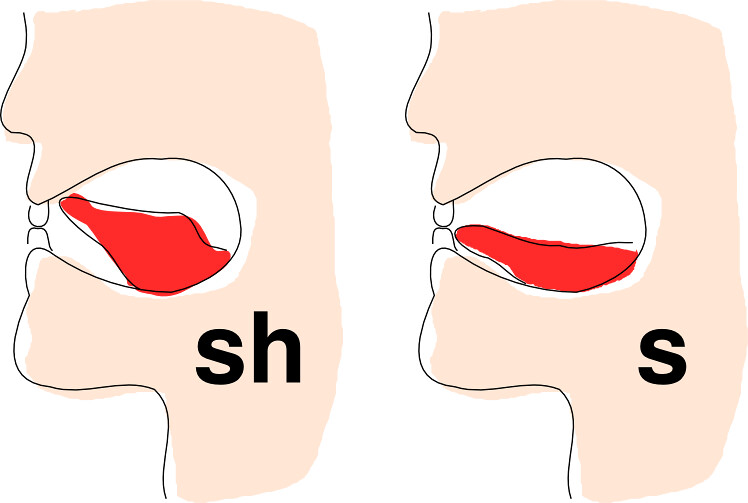
However, in English, the "sh" should be a "s". In your mouth, this is what should be happening.

When you say this, be careful to say the "cissist" part with "s" sounds, not "sh" sounds.

Some other cases where this same pronunciation matter comes up are: sister, policy, pronunciation, and symbol. Take care with any word containing "s".

So, to further demonstrate my narcissitic tendency, here's a photo of something I cooked recently! It's fried tofu and celery stir-fried in black-bean sauce (be careful about the "s" sound at the beginning of the name of this vegetable).
  • tendency - 偏向, 帰趨, テンデンシー, 風潮, 気運, 傾き, 動向, 傾向, 勢運, 勢い, 趨向,趨勢
If you have any good vegetarian recipes, I'd like to hear them. Send me email!

2010/03/02

「distraction 」と「destruction」の違い

Something unsual happened on Sunday. Just as I was finishing my lunch, there was a phone call on the intercom. (all of today's definitions are from Edict)
  • インターフォン intercom;
The building manager called, asking us to evacuate the building. He said the fire alarm had gone off on our floor!
  • 立ち退く (たちのく) (v5k) to evacuate; to clear out; to vacate; to withdraw; to take refuge; (P);
  • 火災警報 (かさいけいほう) fire alarm;
Within a minutes, I had grabbed as many valuables as I could and ran down many, many stairs to the lobby.
  • 貴重品 (きちょうひん) (n) valuables; treasures; (P);
When I got there, there were roughly 30 firemen, several police officers, building staff, and residents around the building. I was amazed at the quick response.
  • 略 (ほぼ) (adv) almost; roughly; approximately; (P);
As it turns out, one resident went to sleep with a pot on the stove. The burning contents inside produced a lot of smoke, triggering the smoke detector. Fortunately, there was no fire and there were no injuries.
  • 誘発 (ゆうはつ) (n,vs) cause; induce; lead up to; (P); trigger?
Instead of destruction, it just turned out to be a big distraction from my Sunday activities.
  • 潰滅 (かいめつ) (n,vs) destruction; annihilation;
  • 憂さ晴らし (うさばらし) (n) diversion; distraction;
Notice that "destruction" and "distraction" have very similar spelling and pronunciation, but the meanings are really different.

As for the pronunciation, the "e" in "destruction" sounds like the "ee" in "see". The "i" in "distraction" sounds like the "i" in "pig" and "tip". The "u" in "destruction" sounds like the "u" in "truck". The "a" in "distraction" sounds like the "a" in "track". Be careful!

2009/10/07

「L」と「R」の違いは何?

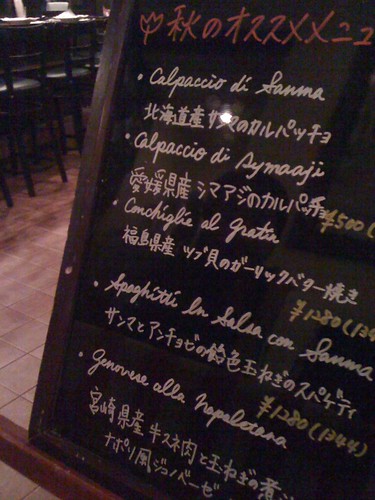
After walking past the restaurant serving "meatfood", I passed this Italian restaurant. I talked about how "meatfood" is incorrect yesterday:
http://upgradeenglish.blogspot.com/2009/10/meal.html
The first two dishes on this sign say:
× Calpaccio di Sanma
× Calpaccio di Aymaaji
I don't know if it's good or bad, but it was interesting to see that the "L" sound and the "R" sound are often confused by Japanese, even if it's in Italian and not English. This sign should say carpaccio, which means raw meat or fish. It's like sushi, but Wikipedia says this dish was invented in 1950.
http://en.wikipedia.org/wiki/Carpaccio
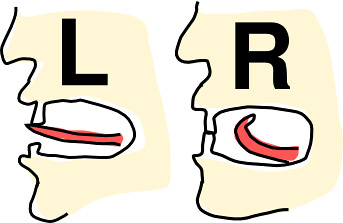
I know it might be hard to hear the difference between an "L" and an "R". However, pronouncing them correctly isn't as hard.
  • 発音する (v) pronounce
For an "L", start with your tongue touching the bottom side of your top teeth, like the picture below. For an "R", curl your tongue.

2009/06/04

「future」と「feature」…気をつけて!

I keep running across people confusing "future" and "feature".
  • run across ~に偶然会う We ran across an old friend of mine from high school. : 私たちは、高校時代からの古い友人に、偶然会った。
  • 機能 (きのう) (n,vs) function; facility; faculty; feature; (P); (definition from Edict)
  • feature an interview with(人)のインタビューを特集{とくしゅう}する (definition from 英辞郎 on the web)
  • 未来 (みらい) (n) (1) the future (definition from Edict)
Here are some example mistakes.
×___ is futured. <- there's no such word in English
○ ___ is featured.
× What kind of futures does it have?
○ What kind of features does it have? それにはどんな機能がありますか。
but
○ What kind of future does it have? (have a future 将来性がある, definition from 英辞郎 on the web)
The problem, I think, is that these two are pronounced similarly. However, they are not pronounced the same.
feature = "fee" + "chur" (like in "churn", or like "purr" with a "ch" at the beginning)
future = "few" + "chur" (the same as above)
In the near future, this site will feature a series of posts on conditional sentences. You can expect that next week!
  • conditional sentence 条件文
People should be careful with their use of English on signs to avoid being featured on our blog.

We're looking forward to talking with you in the future.

2009/05/02

Dinner turned out like this.


I made baked pesto penne with cherry tomatoes and デコポン. Since penne is Italian, I wasn't sure how to pronounce it. In English, we stress the first syllable, "pen", like something you write with. The second syllable is just like ね in Japanese. So it's like this, PEN-nay.

I realized I have no idea how to say デコポン in English, other than a funny kind of orange.
  • デコポン (n) Citrus reticulata Shiranui; type of citrus fruit (sweet orange with a lump at the top); (definition from Edict)
Wikipedia has a page on it, and guess what, the English is "dekopon", since it's a Japanese hybrid:
The pasta turned out great, and the fruit was super. I wish I could cook like this all of the time.
  • うまく行く (うまくいく) (v5k-s) to go smoothly; to turn out well; to do the trick; to have peaceful relations; (P); (definition from Edict)
You can see, Japanese isn't the only language with loan words. English has plenty of them, too.

I hope you all are having a nice holiday.

2009/04/28

A model who doesn't travel is in trouble. If your pronunciation is wrong, you might be in trouble, too.

Sometimes loan words (外来語) can cause problems with pronunciation. Because Japanese lacks sounds that exist in English, words like "model" and "travel" are hard to represent accurately.

As a result many people pronounce "travel" like "trah-vell", with the second syllable sounding like "well". However, the "-vel" part should sound like "vul", as in "vulture", "vuluminous", "vuluptuous". The first syllable should sound close to "trap" or "transport". The same goes for "model", which many pronounce like "mow-dell", with the second syllable sounding like the computer company Dell. Instead, it should be "mah-dull", with "mah" like "mop" and the second syllable being "dull", as in "not bright".

While we're talking about "travel", we should also mention "trouble". There are two common problems here. One is "b" versus "v". Remember, when you say the "b" sound, your lips should touch. With a "v" sound, your bottom lip should touch the bottom of your upper teeth. The second problem is the vowel sound in the first syllable. "Travel" has a short "a" sound, like "bat", "cap", or "dance". The vowel sound in the first syllable of "trouble" is "uh" like "truck", "bust", or "balloon".

Following this advice will help to keep you out of trouble when you travel.

2009/04/22

Even more on fatigue...

The other day I wrote about "fatigue":
Today two more examples came to mind:
  • vague - あい昧;
  • plague - 疫病;
There's nothing vague about the plague of fatigue in Japan; everyone is in need of the coming Golden Week holidays. You might feel that English spelling is sometimes vague with regards to pronunciation; however, with enough study you will start to see the patterns.

2009/04/18

More on fatigue, pronunciation

It's not just fatigue that has that funny "gue" at the end of it. For a quick review from yesterday's post, remember that "fatigue" is pronounced with only two syllables, with a sound similar to "proceed" or "succeed". The "gue" isn't pronounced like ギュ, but just like "g" in English. Other words with this sound include "colleague" and "league".

Don't confuse "colleague" with "college"; these two are pronounced very differently. The "g" in college sounds like a "j", but the "g" in "colleague" doesn't. Use this word to mean "coworker". Incidentally, that's another word that is frequently mispronounced. "Co" is a prefix which means "together". Usually in English we don't stress prefixes. However, this is an exception. Most people I know say "CO-worker", not "co-WORKer".

Here's a sentence to help you remember these words:
  • My colleagues joined a baseball league to get rid of their fatigue.

フォロワー