ラベル 間違えやすい英文 の投稿を表示しています。 すべての投稿を表示

2009/12/01

「in the case of」の使い方

I've talked about "in case" and "in case of", so today I want to talk about "in the case of". Here's the definition from Eijiro on the Web:
  • in the case of ~の場合{ばあい}は、~について言えば、~ついては、~にしてみれば
"Of" is a preposition, so you have to follow it with a noun, like this:
  • in the case of __(n)__, (sentence).
You can also reverse the order, putting the "in the case of" phrase at the end. In that case, don't use a comma.

Someone gave me some nice vegetables on the weekend. Having recently tasted a lot of Southeast and South Asian dishes, I had those flavors on my mind. However, this is Japan, and my vegetables were Japanese ones.
× I have to be honest -- I love Asian food, but in case of Japanese food, I find the flavors are often a bit too weak for me. <- what's the emergency?
× I have to be honest -- I love Asian food, but in Japanese food's case, I find the flavors are often a bit too weak for me. <- Japanese food is not a person, so apostrophe "s" cannot be used
○ I have to be honest -- I love Asian food, but in the case of Japanese food, I find the flavors are often a bit too weak for me.
Maybe it's because I'm a vegetarian that a lot of Japanese food has a weak flavor for me.

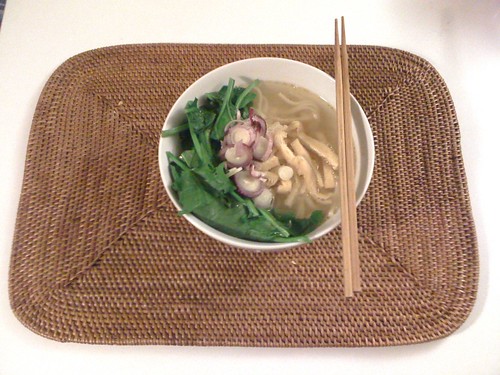
Anyway, in order to make my noodles, I used a whole Japanese citron, a lot of Japanese powdered chili pepper, red scallions, and some fresh spinach. The soup also had seaweed bullion and sweet cooking rice wine.
  • 長葱 (ながねぎ) (n) scallion; shallot; green onion; spring onion;
  • 柚子 (ゆず) (n) (uk) Japanese citron (Citrus junos, Citrus ichangensis x Citrus reticulata var. austera); yuzu;
  • みりん sweet cooking rice wine
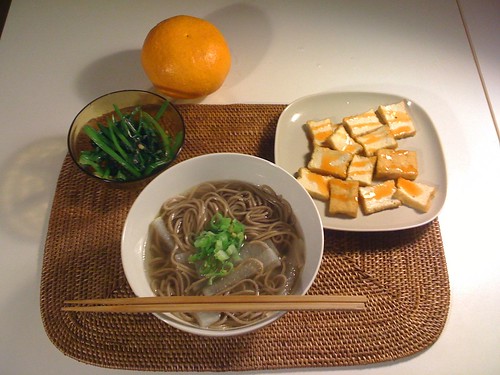
It didn't taste so much like Southeast Asian food, but it was pretty yummy.

2009/07/22

「so」の使い方、復習

There have been a few posts about "so" recently. Here's the list of all of the posts.
http://upgradeenglish.blogspot.com/2009/07/so.html
http://upgradeenglish.blogspot.com/2009/07/more-about-so.html
http://upgradeenglish.blogspot.com/2009/07/even-more-about-so.html
http://upgradeenglish.blogspot.com/2009/07/is-that-so.html
Here's a story to review what you've learned.

In the early evening on Sunday, I was in Yurakucho to do some shopping and have dinner. I don't like the restaurants there so much, but I needed to do some shopping at Bic Camera.

When I got to the plaza between the station and マルイ(spelling???), I noticed again that 50 people or so had their cellphones raised to the sky.

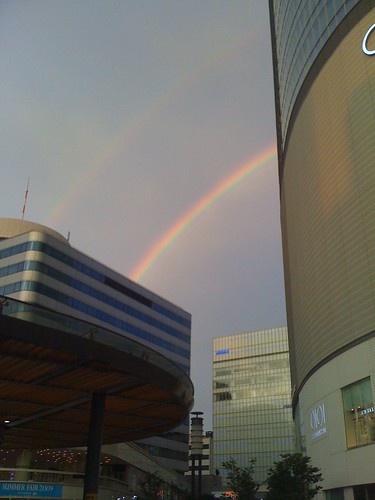
I walked into the plaza so that I could see the sky in the direction they were pointing. Once again, there was a double rainbow! It was so beautiful!

"It can't be so," I thought, "twice in only a few months!"

Of course, everyone was so impressed that they couldn't help but take pictures. I did so, too. Still, compared to the real thing, this photo is just so-so.

2009/07/16

More about "so"

A few days ago, I was talking about "so".
http://upgradeenglish.blogspot.com/2009/07/so.html
Here's another mistake that I should have pointed out:
× It was so hot day today.
○ It was so hot today.
○ It was such a hot day.

× Sooooooooooooooooooooo cute baby!!
Sooooooooooooooooooooo cute!!
Such a cuuuuuuuuuuuuuuuuuuute baby!!

× I don't like so crowded trains.
○ I don't like such crowded trains.
The patterns you should notice are:
Such a _(adj)_ _(n)_!
So _(adj)_!
but never:
××× So _(adj)_ _(n)_!
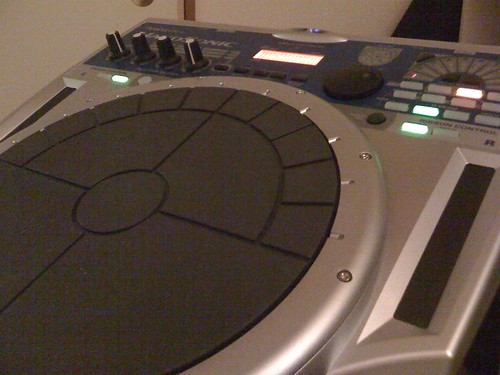
This is an electronic drum. It's such a fun instrument to play, but I'm so busy that I don't get to play it as much as I'd like. I'm looking forward to Obon so that I can play it more.

Because you are reading this blog, I know you are so smart. Such a wise person as yourself will never make this mistake about "so" again, right?

2009/07/14

「miss」と「mistake」の違いは何ですか?

We talked about making mistakes back on May 9.
http://upgradeenglish.blogspot.com/2009/05/do-you-always-make-this-mistake.html
Here are some other things you should be careful about when talking about your mistakes.
  • うっかりミス = × careless miss ○ careless mistake
  • スペルミス = × spell miss ○ spelling mistake
  • 計算ミス = a miscalculation
  • 私のミスです。It's my mistake.
Remember that the verb you should use with "mistake" is "make".

In English, "miss" has a few meanings, but maybe the most common meaning is a verb.
  • 慕う (したう) (v5u,vt) to yearn for; to miss; to adore; to love dearly; (P); (but I've heard that you guys don't say this in Japanese)
However, we often say sentences like this in English:
  • I miss the food in Taiwan. <- true!
  • I don't miss the food in Texas. <- true!
Watch out for these mistakes!

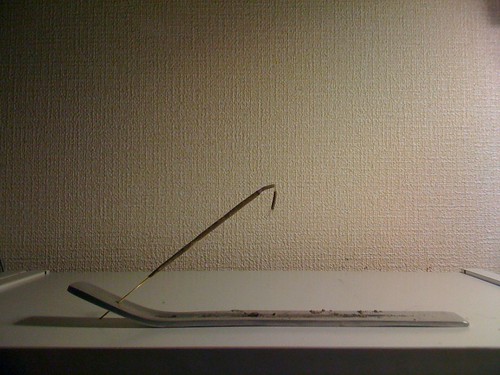
I tried to take a picture of the smoke coming off a burning stick of incense, but I think it was a mistake to try taking such a photo with the poor camera in the iPhone. Maybe I had better stick to photos of the food I cook...

2009/07/07

「taste」の正しい使い方

Here's some more about food. I often hear people use "taste" as a noun, like this.
× Tea is good taste.
× Tea has a good taste.
However, as a noun, "taste" usually has this meaning:
have good taste (~の)センスがある、(~の)趣味{しゅみ}が良い
She has good taste.
If you look in the dictionary, probably you will find that it says "taste" as a noun means 味, but it's really not so common, and I don't recommend it for you. If you are talking about the flavor of something (spelled "flavour" in British English), you should use "taste" as a verb.
  • 味 (あじ) flavor; flavour
So, what the people above really want to say is:
○ Tea tastes good.
○ The flavor of tea is nice.
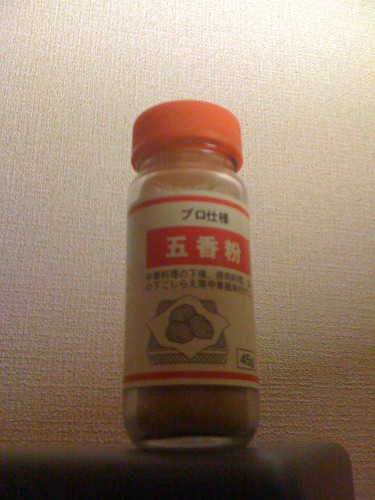
I really like the flavor of this spice. It tastes good to me, and reminds me of Taiwan. Some people don't like it because it contains anise.
  • 八角 (はっかく) (n) (1) octagon; (2) star anise (spice);
I didn't used to like anise, either, but it grew on me.
grow on someone
〔~に対する不安{ふあん}・好意{こうい}・関心{かんしん}などが〕だんだん大きくなってくる、募ってくる
・Once you live in a place, it grows on you. : 住めば都。
・The idea grew on him. : 彼はその考えに取り付かれていた。
・I didn't like English at first, but it has grown on me. : 最初は英語が嫌いだったけど、だんだん好きになってきた。
(definition from 英辞郎 on the web)
I used a big spoonful of this in the soup I made last night. I also used in the tofu and chives dish that I made back on June 22. Those dishes tasted good, I think. If you have recommendations on ways to use spices to make tofu taste better or special, I'd like to hear them.

2009/07/06

「menu」の正しい使い方

Sometimes I hear the word "menu" misused. Sometimes a menu is a document with many items on it. Those items include drinks, side dishes, main dishes, appetizers, desserts, soups, and other things.
menu メニュー、献立表{こんだてひょう}; 料理{りょうり}、食事

お菜 (おかず) (n) (1) (uk) accompaniment for rice dishes; side dish;
前菜 (ぜんさい) (n) relishes; hors d'oeuvres; smorgasbord; appetizer;
Other times, "menu" just means the list of dishes at a meal.
Watch out for mistakes like these:
× I would like to have this menu. <- strange... it sounds like you are ordering every item which is listed
○ I would like to have this item.
○ I would like to have this dish.
× What menu did you choose? <- strange... it sounds like the restaurant had different lists of dishes, maybe depending on the customer
〜 Which menu items did you choose? <- so-so
○ Which dishes did you choose? <- better
× There wasn't this menu last time I was here. <- strange...
○ The menu is different from last time. <- better, it means that several dishes have changed.
○ This item wasn't on the menu last time I was here. <- better, it means that there is one new item.

× You can get any menu. <- strange... it sounds like there is a choice about which list you choose from...
○ You can get anything on the menu.
In this sentence, the double possessive is strange:
× Your today's menu looks good.
○ Your menu for today looks good.
Remember this sentence. It's a common one.
What's on the menu? <- you saw "on the menu" above; it's a common phrase.
  • onthe menu《be ~》メニューにある[載っている]、計画{けいかく}[予定{よてい}]されている
My menu for this evening included this stir-fried zucchini with ginger and red peppers, root-vegetable soup with shredded tofu and egg noodles, and my favorite dark chocolate for dessert. I will have some almond tofu in a little bit, after finishing this post.
根菜 (こんさい) (n) root vegetable;

I hope you had a healthy and delicious dinner. What was your menu?

2009/06/04

「future」と「feature」…気をつけて!

I keep running across people confusing "future" and "feature".
  • run across ~に偶然会う We ran across an old friend of mine from high school. : 私たちは、高校時代からの古い友人に、偶然会った。
  • 機能 (きのう) (n,vs) function; facility; faculty; feature; (P); (definition from Edict)
  • feature an interview with(人)のインタビューを特集{とくしゅう}する (definition from 英辞郎 on the web)
  • 未来 (みらい) (n) (1) the future (definition from Edict)
Here are some example mistakes.
×___ is futured. <- there's no such word in English
○ ___ is featured.
× What kind of futures does it have?
○ What kind of features does it have? それにはどんな機能がありますか。
but
○ What kind of future does it have? (have a future 将来性がある, definition from 英辞郎 on the web)
The problem, I think, is that these two are pronounced similarly. However, they are not pronounced the same.
feature = "fee" + "chur" (like in "churn", or like "purr" with a "ch" at the beginning)
future = "few" + "chur" (the same as above)
In the near future, this site will feature a series of posts on conditional sentences. You can expect that next week!
  • conditional sentence 条件文
People should be careful with their use of English on signs to avoid being featured on our blog.

We're looking forward to talking with you in the future.

2009/05/27

When you use a relative clause, make sure your sentence also has a subject and a verb.

Tonight we were talking about relative clauses.
  • relative clause 関係詞節 (definition from 英辞郎 on the web)
Here's a common mistake which even native speakers make:
× That red cabinet, which I can put books in. <- there's no main verb
○ That cabinet, which I can put books in, is red. <- the subject is "cabinet", and "is" is the main verb
Be careful not to use two subjects:
× Tadao Ando, who is an architect, he designed the New Tokyo Tower. <- two subjects, "Tadao Ando" and "he"
○ Tadao Ando, who is an architect, designed the New Tokyo Tower.
× The weather forecast, which says it will be cooler tomorrow.
× The weather forecast, which says it will be cooler tomorrow, it also says it will rain.
○ The weather forecast, which says it will be cooler tomorrow, also says it will rain.

I'm not looking forward to riding my bicycle in the rain. Hopefully it will just be light rain. Take care!

2009/05/22

How many times have you run the washing machine this week? Have you ever felt the laundry never ends?


In case you haven't read the posts about present perfect tense from earlier in the week, here they are. I have written about it four times this week. After you have reviewed them, come back and read this post.
http://upgradeenglish.blogspot.com/2009/05/now-that-i-have-had-dinner-i-can-write.html
http://upgradeenglish.blogspot.com/2009/05/yesterday-i-started-series-of-posts-on.html
http://upgradeenglish.blogspot.com/2009/05/i-have-written-two-posts-on-present.html
http://upgradeenglish.blogspot.com/2009/05/i-havent-seen-one-of-my-friends-for.html
Sometimes we use present perfect which is sort of a combination of the two ways I mentioned earlier this week.
  • みたい (suf,adj-na) (col) -like; sort of; similar to; resembling; (P); (definition from Edict)
We can use present perfect to talk about something that is finished, but in the sentence we include a term that is unfinished.
  • I have eaten blowfish before.
  • How many times have you been to that restaurant (in your life)?
  • Since I moved to Chuo-ku, I've taken the train far less than I did before.
However, many Japanese want to use "ever" to mean 今まで. That's not OK in a positive sentence.
  • × I have ever...
  • × I've ever been abroad more than five times.
  • × I've ever eaten blowfish two times.
  • × I've ever talked to a stranger because I got lost.
It's good to think about time when using English, but actually present perfect tense already contains this meaning. Because of that, you don't need to use "ever" in these cases.
  • I've been abroad more than five times.
  • I've eaten blowfish two times.
  • I've talked to a stranger. It was because I got lost.
However, don't forget to use present perfect tense with "never".
  • × I never been to Beijing.
  • ○ I have never been to Beijing.
Save "ever" for questions:
  • Have you ever been to Beijing?
There are two restaurants that I have been to twice this week. I feel I've been eating out too much. It can't be good for my health, and it's certainly not good for my wallet either. How often have you felt like that? On top of that, I have done the laundry twice this week, but I haven't folded the clean clothes yet. This weekend, I hope. I also hope you all enjoy your weekend. See you in class!

2009/05/21

I haven't seen one of my friends for a long time.


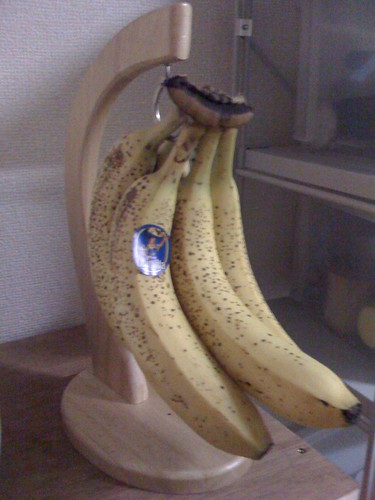
We bought a banana rack a few weeks ago. It works pretty well. Still, I have been disappointed that the bananas don't stay green longer. I really love slightly green bananas! I suppose I should buy fewer bananas each time so that I can enjoy them before they start to develop black spots.

This week, I have written a few times about present perfect tense. If you want to review, here are the posts:
http://upgradeenglish.blogspot.com/2009/05/now-that-i-have-had-dinner-i-can-write.html
http://upgradeenglish.blogspot.com/2009/05/yesterday-i-started-series-of-posts-on.html
http://upgradeenglish.blogspot.com/2009/05/i-have-written-two-posts-on-present.html
So, remember that one reason to use present perfect is to talk about an action which began in the past and has continued up to the present. The action is NOT FINISHED, or JUST FINISHED.
  • × How long here worked? <- a direct translation from Japanese?
  • ○ How long have you worked here?
When you talk about "how long" using present perfect, use "since" or "for", but not "from".
  • × I have worked here from last spring.
  • ○ I have worked here since last spring.
  • ○ I have worked here for about a year.
  • ○ I worked for my previous employer from 2006 to 2007. (雇い主 employer; definition from Edict)
A: Where did you grow up?
B: Tokyo.
A: Oh, so you must know the city well.
B: Sure, I've lived here my whole life.
Present perfect tense has this meaning of continuing from the past up to now. However, I think native speakers are more likely to use present perfect continuous in this situation, unless the action has been continuing for a really long time.
  • × I've listened to this mp3 nonstop lately. You should really download it.
  • I've been listening to this mp3 nonstop lately. You should really download it.
Another difference is that when using present perfect, the action is more likely finished. When using present perfect continuous, there's a greater chance that the action is still going on.
  • × Why haven't you replied to the email I sent? I have waited since last week!
  • ○ Why haven't you replied to the email I sent? I have been waiting since last week! <- and I am still waiting
  • I've been working on this report for days, and I'm still not finished. <- I'm still working on it.
I haven't seen one of my Taiwanese friends since January. She has been to Moscow recently, and I'm really looking forward to hearing about her trip. We are planning to have dinner on the weekend. If dinner is good, I'll recommend the restaurant to you.

I have already written part of tomorrow's post; it's more on present perfect tense. Look for that tomorrow. The press has announced that a case of swine flu has been found in Tokyo, so everyone take care!

Have you finished your laundry?


I have written two posts on present perfect this week. I wrote them on Monday and Tuesday. You might want to read them first.
http://upgradeenglish.blogspot.com/2009/05/now-that-i-have-had-dinner-i-can-write.html
http://upgradeenglish.blogspot.com/2009/05/yesterday-i-started-series-of-posts-on.html
Yesterday, I mentioned that one reason to use present perfect is to talk about something that happened before but is important now. On Monday night, I was in class at a company. This was part of our conversation:
A: Can you go home after class?
B: Yes, because I've already finished all of my work. In fact, I finished it before lunch.
It was a joke; she didn't really finish before lunch, but she had finished her work.

When the events aren't really important now, don't use present perfect tense.
  • ○ (at an accident) Has anyone been injured? (the accident just happened, and you wonder if you need to call an ambulance) <- present perfect
  • ○ (telling the story about the accident) I saw an accident today, but fortunately no one was injured. <- past
Sometimes the past events become important now because they directly relate to the current situation or conversation topic.
A: Can you really run from here to Yokohama?
B: Yes.
A: Really? Why?
B: Because I have run marathons several times.
Sometimes this is paired with a past event. The news is contrasted with a past event.
  • × I have been injured, but I'm well now. <- the injury isn't important now; being well is important
  • ○ I was injured, but I have recovered. I'm well now. <- use present perfect to point out the important news
I haven't done the laundry yet, so I should stop my post here. I don't want to stay up too late tonight. I haven't finished telling you everything I want to say about present perfect, though, so I will be writing about it again tomorrow.

2009/05/20

Have you gone to bed yet?


Yesterday, I started a series of posts on present perfect tense.

Last night in class, we were talking about two basic reasons to use present perfect tense:
  1. happened before, but it's important now. The action is FINISHED. (for example, news and experience)
  2. an action which began in the past and has continued up to the present. The action is NOT FINISHED, or JUST FINISHED.
As an example of number one:
  • I have eaten dinner, so I'm not hungry now.
And as an example of number two:
  • I have lived in Japan for more than three years.
Right away, you should be able to see one of the tricky things about present perfect; depending on the context, the action may or may not be finished. Still, the thing these two both have in common is that there is a strong connection between the past and now.

One of the most common mistakes in students' present perfect sentences is stating a past time in the sentence. We can't do that in present perfect sentences:
  • × I have been to Hong Kong eight and a half years ago. <- "eight and a half years ago" is a past time
  • ○ I have been to Hong Kong. I went there eight and a half years ago.
Most of the lights in the buildings around Tokyo Station have been turned off, so it's much darker now. It must mean most people have gone home. The two towers on either side of Tokyo Station turned off many of their lights at 10 pm. I suppose I should follow them. See you in class soon. Good night!

2009/05/19

Now that I have had dinner, I can write tonight's post.


I have just finished dinner. What was on tonight's menu? I had buckwheat noodles with turnip and green onion, spinach stir-fried with garlic and ginger in vegetarian oyster sauce, fried bean curd topped with Thai chili sauce, and some kind of citrus fruit. I'm not sure what the fruit is called. At any rate, I'm full now.
  • buckwheat noodles そば
  • radish 大根
  • green onion 葱
  • spinach 法蓮草
  • ginger 生姜
  • garlic 蒜
  • bean curd 豆腐
Look at the headline for today's post and the paragraph above. Do you see the present perfect tense?
  • present perfect tense 現在完了時制
Why have I used present perfect tense? The reason in the first case was that finishing dinner happened in the past, but it is important now. The reason it is important is that I can now write this post. I can't write a post on an empty stomach.

In the first paragraph, I'm announcing news. Notice the pattern. The first sentence uses present perfect to announce the news. The second and third sentence use simple past to talk about the details. The final sentence uses simple present to talk about the results now. This is a really common pattern that you can find in the newspaper often.

It seems to be really hard for even advanced students to use present perfect correctly. Since I have seen so many students struggling with present perfect recently, I think I'm going to talk about present perfect for a few days. Keep reading. I hope that even if you have felt present perfect is difficult, you will become much better at it after the next few posts I write.

2009/04/25

Talking about Kusanagi and being drunk (not "drunker")

The media is really making a big fuss about Kusanagi being drunk. Some think he shouldn't have been arrested. Here's an article on it:

http://www.breitbart.com/article.php?id=D97OSKN81&show_article=1

As students try to describe this incident, these words get used:
  • drunk (adj, past participle v, n)
  • drunker (comparative adj)
  • drunkard (n)
The most common mistake is to say:
  • × He was very drunker. (Drunker than what? What is he being compared to?)
  • ○ He was very drunk. (He had consumed too much alcohol.)
A drunkard (also called a drunk) is someone who is always drunk. They cannot stop drinking alcohol. We would probably call them alcoholics. The ex-finance minister Nakagawa was reported to have had alcohol problems in the past (http://newsbizarre.com/2009/02/video-shoichi-nakagawa-drunk-at-g7-news.html), so some people might call him a drunk. I haven't read similar reports about Kusanagi; we shouldn't call him a drunk. However, we can use the comparative adjective to say:
  • He was drunker than the police would allow.
  • He was drunker than he should have been.
When you're drinking, be careful not to drink too much or get too drunk. If you do, people might start calling you a drunkard.

フォロワー