2010/10/16

「get」と「become」の違い

The sunset earlier this week was beautiful! Take a look at that!
  • × It's getting autumn, so the sunsets are getting more beautiful.
  • ◯ It's becoming autumn, so the sunsets are getting more beautiful.
It's true that "get" has the same meaning as "become", but it must be used with an adjective. It can't be used with a noun.
◯ Since it's becoming cooler, I feel it's more comfortable.
◯ Since it's getting cooler, I feel it's more comfortable.
"Cooler" is an adjective, so both of these are OK, just like "more beautiful" in the first example.

× As I get more comfortable, I am also getting a more productive worker. <- "worker" is a noun
◯ As I get more comfortable, I am also becoming a more productive worker.

I hope that I can bring you more blog posts this month than last month.

2010/10/15

「benefit」と「profit」の違い+JunkWorldは英語の使い方に注意した方が良い

Someone was asking about the difference between "benefit" and "profit". There are always mistakes.
benefit 【名】(definition from Eijiro on the Web)
  1. 便益{べんえき}、恩恵{おんけい}、利益{りえき}[ため]になること
  2. 援助{えんじょ}、手助け{てだすけ}
  3. 〔金銭的{きんせん てき}〕利益{りえき}、利得{りとく}
  4. 〔社会福祉の〕給付金{きゅうふきん}、福祉手当{ふくし てあて}、扶助金{ふじょきん}◆通例benefits
  5. 慈善{じぜん}[募金{ぼきん
profit 【名】(definition from Eijiro on the Web)
    利益{りえき}、収益{しゅうえき}、利潤{りじゅん}、得 ・100,000 yen profit : 10万円の利益。
Consider the case of a company which has just begun producing a new product. The sales of the product are going very well, and the company management is very happy. That's because:
× The company got a lot of benefit from the new product. <- this is roughly true, but the real reason...
◯ The company made a big profit from the new product. <- ...is that they earned a lot of money!
"Benefit" is used for good things of any type.
  • You benefit a lot from studying English.
"Profit" is most commonly used to talk about the money earned by a company.
  • Profits of companies during the bubble were good, but some companies are having trouble making profits today.
Both of these words can also be used as verbs.

I wonder about the profits of JunkWorld, a computer reseller I saw on Nakano Broadway. I'm not sure if they profit from selling used computers, but they would definitely benefit from changing their name.

That's because "junk" is another word for "garbage". New computers are getting really cheap, so I don't know why anyone would be interested in buying junk. The definition below does include "second-hand goods", but the only second-hand goods that can be called "junk" are the ones that are basically garbage.
junk 【1名】(definition from Eijiro on the Web)
  1. くず、がらくた、廃品{はいひん}、中古品{ちゅうこひん}
  2. ジャンクメール
  3. salt junk
  4. 〈話〉ばかげた話、ナンセンス
    ・What a load of junk! : ばかなことばっかり言って!
I'm sure you would benefit by buying a new computer rather than a piece of junk from JunkWorld. Unfortunately, that will deprive them of their profits.
  • deprivation 奪う、取り上げる、剥奪{はくだつ}する◆【類】strip ; divest ; take away (defintion from Eijiro on the Web)

2010/10/05

温泉について

Two Sundays ago, I could relax really well.
~That's because I went to an onsen. <- "Onsen" is Japanese
◯ That's because I went to a hot spring. <- "hot spring" is English, and America even has some!
The hot spring was a new one in Musashi-koyama. It had two kinds of water, one of which was kind of beige. Someone told me:
× Kanto area hot spring have brown color.
◯ Hot springs in the Kanto area have brown water.
As for the best verb to use with hot springs, it's a bit hard because Americans don't have the habit of enjoying hot springs. We could say:
~I soaked in the hot spring. <- people will understand, but...
◯ I bathed in the hot spring. <- this is probably better.
There are some interesting facts about hot springs here:
http://en.wikipedia.org/wiki/Hot_spring
Even more interesting is this page on the therapeutic uses of hot springs:
  • therapeutic 【形】治療法{ちりょうほう}の、治療(上){ちりょう(じょう)}の、療法{りょうほう}の、癒やす力のある、癒やし系の、心の健康{けんこう}に良い◆「心を癒やす」という意味と、精神医学的な「セラピー治療の」という意味の両方がある (definition from Eijiro on the Web)
http://www.eytonsearth.org/balneology-balneotherapy.php

2010/09/29

森永は英語の使い方に注意した方が良い。

Someone gave me a snack from Morinaga. It's called "Nudear", and it's a kind of chocolate cookie or round brownie.
  •  brownie 【名】
  1. ブラウニー◆チョコレート入りケーキ。味が濃くナッツが入っている。(definition from Eijiro on the Web)
Here's a page with the commercial for Nudear.
http://www.morinaga.co.jp/cm/nudear.html
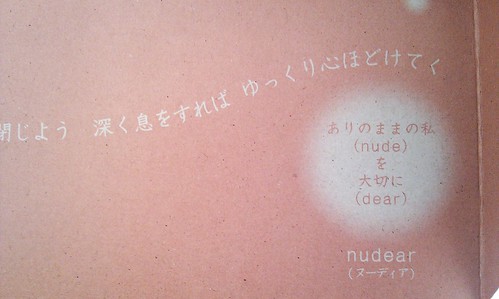
When you open the box, there's an explanation of the name on the inside. It says:
  • ありのままの私 (×nude) を大切に(dear)
The problem is that ありのままの私 doesn't mean "nude" in regular spoken English. It means "just as I am".
  • You always accept me just as I am.
  • I woke up late, so I had to go to work just as I was, without a shower or even my suit.
They should check out Billy Joel's old hit, "Just the Way You Are".
http://www.youtube.com/watch?v=ounJsqomcv8
If I went to work nude, wow! People would be so shocked! Here's the most common meaning of "nude":
  • nude (adj) 裸の、むきだしの、衣類{いるい}をつけていない、裸体{らたい}の、ヌードが登場{とうじょう}する (definition from Eijiro on the Web)
Morinaga is a big company! They make great almond pudding.
  • almond pudding (or almond tofu, almond jelly) - 杏仁豆腐
Any company of their stature ought to be able to afford to check marketing material with a native speaker, rather than teach everyone wrong English.
  • of this stature
    これほど(素晴{すば}らしい)才能{さいのう}を持つ (definition from Eijiro on the Web)
If you know anyone working there, you can suggest that they check my blog.

2010/09/22

「difference」の使い方

I wrote about "difference" the other day. Take a look at that post for review:

http://upgradeenglish.blogspot.com/2010/09/differdifferentdifference.html

Over the weekend, I visited Niigata. The cooler weather was really pleasant.
× There's a big difference with Tokyo and towns in the mountains.
◯ There's a big difference between Tokyo and towns in the mountains.
When you use "difference", don't forget this pattern:
  • difference between _(n)_ and _(n)_
In Naeba, there wasn't a Seven Eleven or Family Mart, and there were far fewer vending machines. That was a bit inconvenient.
  • vending machine〔飲料{いんりょう}などの〕自動販売機{じどう はんばいき}(definition from Eijiro on the Web)
That's not the only thing, though. There's also a difference between the air in Tokyo and the air there. The air in the mountains was clean and had the wonderful smell of plants. The air in Tokyo is mostly fumes from buses, taxis, and smokers.
  • vehicle fumes 車両{しゃりょう}の噴煙{ふんえん}[排(出)ガス](definition from Eijiro on the Web)
Despite that, I think I prefer the convenience of the city. Still, it was nice to escape for a few days.

2010/09/11

私は日本語の使い方に注意した方が良い。(part 3)

I forgot the particles in my headline the other day: に and が.
  • 助詞 particle
It was my post about good food in Singapore, like the vegetarian masala noodles in this picture. Take a look:
http://upgradeenglish.blogspot.com/2010/08/blog-post_25.html
I always appreciate people pointing out my mistakes. Otherwise, I'm wandering around in the dark.
in the dark
1. 暗やみの中で、見えない状況{じょうきょう}で
2. 見当{けんとう}がつかないで、(何も)知らずに、秘密{ひみつ}に ...I'm completely in the dark about ~. : ~のことは皆目見当がつかない。(definitions and example from Eijiro on the Web)
Learning another language takes years! That means it takes patience and a thick skin, too!
  • take ~を要する、必要{ひつよう}とする (definition from Eijiro on the Web)
  • have a thick skin〔批評{ひひょう}などに対して〕神経{しんけい}がずぶとい、鈍感{どんかん}である
Me forgetting particles is like many people in Japan forgetting articles.
× When I am watching movie at home, the phone may ring.
◯ When I am watching a movie at home, the phone may ring.
× One of TVs doesn't work well.
◯ One of the TVs doesn't work well.
Think of these mistakes like noise in your English:
http://upgradeenglish.blogspot.com/2009/09/blog-post_9921.html
Don't hesitate to point out my mistakes, because I'm sure I make a lot of them, and please, develop a thick skin!

2010/09/07

「differ、different、difference」の違いは何?

I'm out! 
  • be out of something ~がなくなって、~を切らしていて、~が切れて、~を失って
    We're out of sugar. : 砂糖を切らしている。(definition and example from Eijiro on the Web)
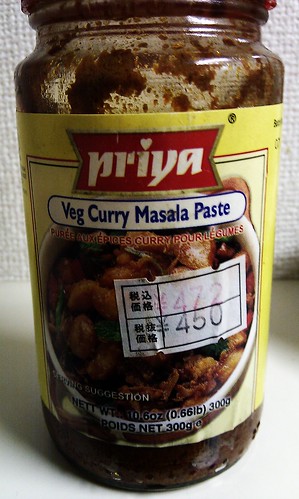
This is a really delicious paste that I picked up in Okubo at a small import food shop. It has a strong flavor and can turn a dish red. I've made curry and soup with it. I'm still not an expert on Indian food, but I think the flavor is South Indian.
× It is different to Japanese curry roux.
◯ It is different from Japanese curry roux. <- "Different" is an adjective.
  •  curry roux 《料理》カレーのルー (definition from Eijiro on the Web) <- note, the pronunciation of "roux" is the same as in Japanese
× There is difference from Japanese curry roux.
◯ There is a difference between Japanese curry roux and this masala paste. <- "difference" is a noun, so "a" is necessary

◯ Japanese curry roux differs from this curry paste. <- too formal! Don't say this! "Differ" is a verb. 
However, now I have to get another jar of it, so that means a trip to Okubo.

Here's the website of the company that makes it.
http://www.priyafoods.com/india/masalapastes.htm
There are some different pastes on that site; maybe this time I'll look for the biryani paste, too!

2010/09/01

Sorry about last month!

Last month I couldn't manage to do as many blog posts as usual.
  • manage to  何とか~する (definition from Eijiro on the Web)
That's partly due to my trip to Singapore.
  •  due to ~が原因{げんいん}で、~に起因{きいん}して、~のせいで、~によって、~の理由{りゆう}から、~のおかげで、~のため、~の故に、~の結果{けっか}、~という要因{よういん}を背景{はいけい}として (definition from Eijiro on the Web)
It's also owing to my catching a cold on my return to Tokyo.
  • owing to ~のおかげで, ~のせいで (definition from Eijiro on the Web)
In the end, I think the heat had a role to play as well.
  • play a role in causing

    ~を引き起こす一因{いちいん}となる、〔疾患{しっかん}など〕の発現{はつげん}[発症{はっしょう}]にかかわる (definition from Eijiro on the Web)
Summer is hard for me, and I bet it is hard for many of you all, too.

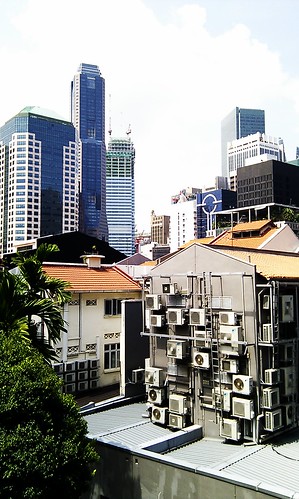
Air conditioning is said by many to be no good for our health. However, sometimes I feel I need to be in a building like this one I saw in Singapore. Look at all of those air conditioners! I didn't go in; I wonder how freezing it is inside.

This month I'm going to do my best to bring you a lot of posts, though. Wish me luck!

フォロワー